 Advancing Culturally Responsive Integrated Care: Jose Morell’s Commitment to Expanding Behavioral Health Access
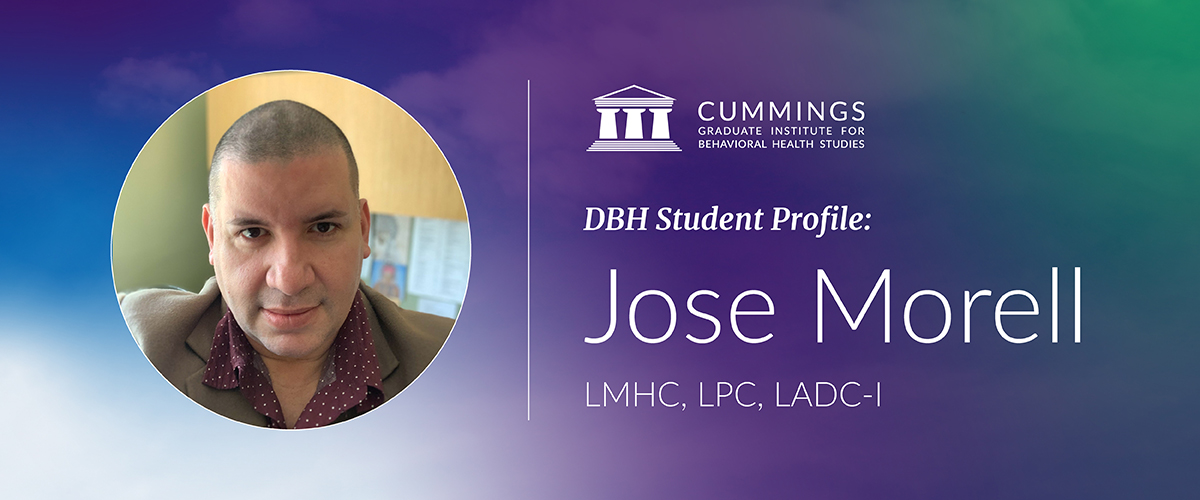
Jose Morell is a Licensed Professional Mental Health Counselor and Drug Abuse Counselor, a Master’s level clinician, and a Doctor of Behavioral Health (DBH) student at the Cummings Graduate Institute for Behavioral Health Studies (CGI). With nearly 20 years of clinical experience, he serves individuals, couples, and families in private practice and is known for his collaborative, strengths-based, and client-centered approach. A bilingual, bicultural therapist, Jose is deeply committed to culturally responsive care for diverse communities. Specializing in anxiety and mood disorders, trauma, addiction, anger, LGBTQ+ affirming care, relational concerns, and multicultural issues, his work is grounded in Cognitive Behavioral Therapy and informed by extensive experience in integrated primary care settings. In this interview, Jose shares how the DBH program has shaped his approach to culturally responsive integrated care, the experiences that strengthened his commitment to collaborative healthcare models, and his vision for expanding equitable behavioral health access for underserved communities.
How has the DBH program influenced your approach to behavioral health?
The DBH program has improved my ability to handle complex behavioral health issues, such as limited access to care, chronic stress, trauma, stigma around mental health, and social determinants, which are especially common in the Latinx immigrant community. By focusing on integrated care, population‑based strategies, and culturally responsive leadership, the program has increased my capacity and confidence to provide evidence‑based services that connect medical and behavioral health needs.
This training is deepening my understanding of how immigration stress, acculturation, language barriers, and systemic inequalities influence clinical presentations, enabling me to develop and implement culturally relevant, clinically effective interventions. As a result, the DBH program is helping me shape my approach to making a meaningful impact on the lives of Latinx individuals and families who often face significant barriers to accessing fair, high-quality behavioral health care.
What are your future career goals, and how do you envision the DBH program contributing to your success?
 My passion for integrated, whole‑person care is deeply personal and continues to shape my professional path. After leaving an integrated primary care setting for private practice, I realized how strongly those earlier experiences had reignited my interest in the intersection of physical and behavioral health, where complex needs call for coordinated, compassionate, and evidence‑driven solutions.
My primary professional and academic interest in behavioral health stems from a deeply personal commitment to advancing integrated, whole-person care. I am motivated by a desire to foster collaborative practice, exercise innovative leadership, and expand access while reducing disparities. These are areas that strongly resonate with my values and lived experience. These interests shape a clear professional identity that aligns with my goal of pursuing the Doctor of Behavioral Health, which is to challenge traditional care models, lead interdisciplinary teams, and create meaningful, equity-focused change across healthcare systems.
Can you share an experience that shaped your understanding of integrated behavioral healthcare?
One of the most memorable turning points in my DBH journey came when I transitioned from an integrated primary care setting to private practice. In that shift, I felt the absence of the collaborative, team‑based environment that I had once taken for granted. I began to see, with new clarity, how profoundly integrated care had shaped my understanding of what effective, compassionate healthcare looks like. The contrast between coordinated, whole‑person care and the fragmentation I witnessed in more traditional settings reignited my commitment to the DBH path. It reminded me why integrated care is not just a model but a necessity, one that ensures patients are seen, heard, understood, but most importantly supported across the full spectrum of their needs. This realization continues to anchor my purpose and fuels my drive to lead meaningful change in behavioral health. This contrast became the catalyst for pursuing the DBH degree, as I realized I needed advanced training and leadership skills to rebuild the kind of integrated, patient‑centered systems I know are possible.
What fuels your passion for advancing integrated behavioral health, and how do you stay motivated?
I would say that seeing firsthand how patients fall through the cracks when behavioral and physical health are treated separately has been a powerful motivator for me to advance behavioral health. Experiencing the limitations of siloed systems and their impact on patient outcomes helped fuel my interest in building models of care where no one is overlooked. I am driven by the belief that people deserve to be treated as whole human beings, not isolated symptoms. This personal value keeps me focused on integrated care as the most compassionate and effective approach towards treatment. I have often witnessed how often patients feel unheard or misunderstood in traditional healthcare settings. My motivation stems from a desire to create a patient-centered environment where patients feel seen, supported, and empowered. I have a passion for equity and access. My work is grounded in the conviction that quality behavioral health care should not depend on someone’s cultural background, income level, sexual orientation, or the community they live in. Reducing disparities isn’t just a professional goal; it is a personal mission.
What advice would you give to prospective students or professionals considering the DBH program?
If I could offer advice to fellow students or professionals considering the DBH program, I would emphasize the importance of being fully prepared for the rigor and depth of a doctoral‑level education. This journey requires discipline, focus, critical thinking, curiosity, and a genuine commitment to growth. At the same time, being immersed in a culturally diverse student community has been an unexpected gift, one that enriches discussions, broadens perspectives, and deepens your understanding of behavioral health across different lived experiences. The professors play a pivotal role as well; their compassion, expertise, and dedication to student success help foster both academic and professional resilience. What makes the DBH degree truly special is its versatility. It can take you in many directions, including clinical leadership, program development, consulting, or integrated care innovation, all while still allowing you to make a meaningful impact. This is more than a degree; it is a transformative experience that reshapes how you see healthcare, how you lead, and how you serve.
As he continues his journey in the Doctor of Behavioral Health program at CGI, Jose Morell is strengthening the clinical insight, leadership skills, and systems-level perspective needed to advance integrated, whole-person care. The DBH program is deepening his ability to connect behavioral health with broader healthcare systems, equipping him to better address complex challenges such as access to care, health disparities, and culturally responsive treatment. Through his clinical work and continued doctoral training, he remains committed to creating more equitable, collaborative models of care that support the diverse individuals, families, and communities he serves.
Connect with Jose Morell
Jose Morell on His Commitment to Integrated Behavioral Healthcare