 From Clinician to Change Agent: Silvia Alfaro’s Vision for More Compassionate Systems of Care
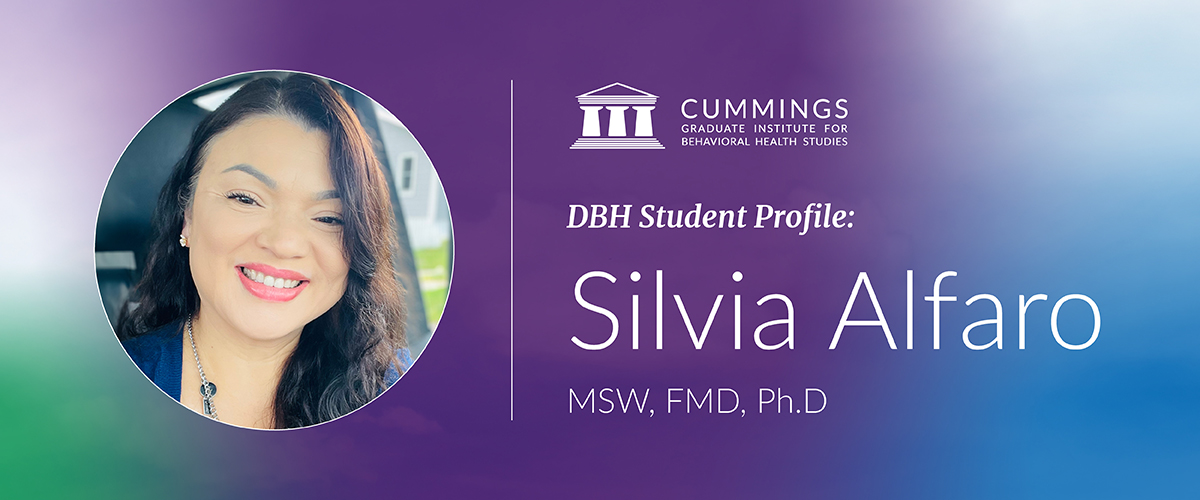
Silvia Alfaro is a Licensed Trauma-Informed Therapist, Licensed Board-Certified Functional Medicine Practitioner, and founder of Whole Rhythm Clinic, LLC. As a Doctor of Behavioral Health student at Cummings Graduate Institute for Behavioral Health Studies, Silvia combines her background in social work, functional medicine, and natural medicine to advance innovative, whole-person approaches to health and healing. Her work combines evidence-based behavioral health practices with mindfulness, homeopathy, and natural medicine to support women, youth, and immigrant populations. As an international speaker and advocate for integrative health, she has volunteered in San Salvador, El Salvador, promoting mental health education and professional collaboration across disciplines. In this interview, Silvia shares her perspectives on whole-person healing, the future of integrative behavioral healthcare, and the importance of leading with purpose, compassion, and a commitment to systems change.
How are you using your behavioral health expertise to impact your local community?
I actively support my local community by offering trauma-informed, bilingual behavioral health services to underserved populations, including immigrant families and trauma-affected youth. As a DBH candidate, I lead community workshops focused on mental health awareness, mindfulness, and holistic wellness. These programs integrate evidence-based behavioral strategies with culturally responsive care to reduce stigma and promote healing. I also collaborate with local coalitions to advocate for trauma-informed systems and provide training for professionals on burnout prevention and integrative approaches. My work empowers individuals to build resilience and fosters a more inclusive, healing-centered community.
What professional experience has most influenced your approach to behavioral health?
One of the most impactful experiences that shaped my approach to behavioral health was working with survivors of complex trauma, including domestic violence, childhood abuse, and migration-related stress. Supporting individuals who had endured prolonged adversity taught me that healing requires more than traditional talk therapy—it demands a compassionate, integrative approach that honors the whole person.
I began incorporating trauma-informed practices, somatic awareness, and culturally grounded techniques into my work, recognizing that many clients held pain in both body and mind. This experience deepened my commitment to behavioral health models that address emotional, physical, and spiritual dimensions of well-being. It also reinforced the importance of creating safe, empowering spaces where clients feel seen and heard beyond their symptoms.
This perspective now guides how I train others, design interventions, and support systems change. I view behavioral health not just as treatment, but as a pathway to restoring dignity, connection, and self-agency, especially in communities that have been marginalized or underserved.
What challenge have you encountered in the behavioral health field, and how do you plan to address it?
A significant challenge I’ve encountered in the behavioral health field is addressing the stigma surrounding mental health in underserved and immigrant communities. Many individuals I work with initially resist therapy due to cultural beliefs, fear of judgment, or lack of trust in healthcare systems. This often leads to delayed treatment, unaddressed trauma, and deep emotional suffering.
To overcome this, I’ve focused on building culturally responsive care models rooted in trust, respect, and accessibility. I incorporate community education, holistic approaches, and trauma-informed language to meet clients where they are. For example, I offer workshops on emotional wellness framed around stress, family health, and mind-body balance—concepts that resonate more with clients than clinical terminology.
Moving forward, I envision expanding these strategies through collaborative community partnerships and training other providers in culturally attuned, integrative care. I also aim to design scalable behavioral health programs that demystify therapy, incorporate traditional healing practices, and empower individuals to seek support without shame. By bridging clinical knowledge with cultural humility, we can begin to dismantle stigma and create safer spaces for healing across diverse communities.
Can you share an experience that shaped your understanding of integrated behavioral healthcare?
One situation that deeply influenced my understanding of integrated care involved my mother struggling with both uncontrolled diabetes and depression. Despite receiving medical treatment, her physical health was declining, and she lacked motivation to follow through with lifestyle changes. It became clear that her mental and physical health were deeply interconnected.
As a behavioral health provider, I worked closely with her primary care team to create a coordinated care plan. We incorporated behavioral strategies to address depression, set small achievable goals for nutrition and movement, and explored the emotional roots of her health behaviors. By aligning medical and behavioral care, we were able to support her holistically, her blood sugar levels stabilized, and her mood and daily functioning improved.
This experience reinforced that lasting change happens when care is person-centered, collaborative, and rooted in a biopsychosocial framework. It taught me that behavioral health is not a separate service – it is essential to effective, compassionate, and sustainable healthcare.
How do you envision making a lasting impact in behavioral healthcare?
I see myself making a lasting impact in behavioral health by leading efforts that integrate trauma-informed care with culturally responsive and holistic practices. With a background in social work, functional medicine, and as a Doctor of Behavioral Health candidate, I am committed to bridging gaps between mental, physical, and emotional care – especially for underserved and immigrant communities often left out of traditional systems.
My work focuses on designing accessible, person-centered models that honor each individual’s cultural identity, lived experiences, and natural healing abilities. I incorporate evidence-based behavioral health strategies alongside mindfulness, somatic therapies, and non-pharmacologic approaches such as homeopathy and nutrition. This integrative framework empowers individuals to take ownership of their healing and addresses root causes of distress, not just symptoms.
In the future, I plan to expand educational initiatives through my organization, Whole Medicine, training providers in integrative behavioral health, creating community wellness programs, and advocating for policy changes that support holistic, trauma-informed care. I aim to create safe, healing environments where behavioral health is not siloed but fully embedded into healthcare, schools, and community spaces.
By combining clinical knowledge, cultural humility, and community collaboration, I hope to reduce stigma, increase access, and foster sustainable healing. My goal is to shift the behavioral health field toward more inclusive, compassionate, and transformative care—leaving a legacy that uplifts both individuals and systems.
What inspired you to pursue the DBH program?
What inspired me to pursue the Doctor of Behavioral Health (DBH) program was my deep commitment to transforming how mental health is understood and delivered—especially for trauma-affected, underserved communities. After years of working as a trauma-informed therapist and holistic health practitioner, I saw firsthand how fragmented care and limited access to behavioral health services often led to poor outcomes, especially among immigrants, women, and communities of color.
I was drawn to the DBH program for its focus on integrated care, population health, and system-level change. I wanted to gain the tools to not only support individuals but also influence healthcare delivery models, reduce disparities, and advocate for inclusive, whole-person care. The DBH program aligns with my vision of combining clinical expertise with leadership, innovation, and community engagement.
Additionally, my background in functional and natural medicine showed me the importance of addressing mind-body connections and the social determinants of health. The DBH program provides the academic and clinical foundation I need to bring these elements into mainstream behavioral healthcare in a way that is evidence-based and scalable.
Ultimately, I was inspired by a desire to be a leader in behavioral health transformation – someone who not only treats but also empowers, innovates, and advocates. The DBH program is helping me become that change agent. As a DBH I can do it all!
How has the DBH program influenced your professional role and long-term career goals?
The DBH program, through the Biodyne Model, has redefined how I view primary care and whole person healing; it’s not just about reducing symptoms, but about restoring meaning, identity, and self-agency in people’s lives.
The DBH program has significantly expanded my perspective and elevated my role as both a clinician and a systems thinker. It has deepened my understanding of integrated care, population health, and the social determinants that shape behavioral outcomes—allowing me to approach client care and program development with a broader, more strategic lens.
At work, I’ve become a more confident leader in designing trauma-informed, culturally responsive interventions. I now incorporate tools such as risk stratification, clinical pathways, and outcome-based strategies that align with medical systems and improve coordination across care teams. This has enhanced my ability to advocate for underserved clients while also contributing to quality improvement initiatives that address provider burnout, service gaps, and health disparities.
The program has also refined my long-term career goals. I am now focused on expanding Whole Medicine, my integrative health initiative, into a platform that offers education, behavioral health training, and culturally rooted care models for marginalized populations. The DBH curriculum has equipped me with the language, skills, and confidence to build scalable solutions, lead interdisciplinary teams, and influence policy.
Overall, the DBH program has empowered me to not only provide effective behavioral health services, but to lead change across systems – bridging clinical care, community wellness, and innovative practice in a way that reflects both scientific rigor and human compassion.
As she continues her Doctor of Behavioral Health journey, Silvia Alfaro is translating her passion for whole-person healing into meaningful action across clinical practice, community engagement, and systems-level leadership. The DBH program has strengthened her ability to bridge behavioral health, functional medicine, and culturally responsive care while equipping her with the tools to drive sustainable change. Through her work with underserved communities and her vision for expanding integrative behavioral health education and services, Silvia exemplifies the next generation of healthcare leaders committed to creating more compassionate, inclusive, and effective models of care.
Connect with Silvia Alfaro
-
- Website: wholerhythm.com
Explore Silvia Alfaro’s Research as a DBH Student
Bringing Integrative Health and Inclusion to the Forefront in El Salvador
DBH Student, Silvia E. Alfaro, advances integrative health and champions inclusion across communities in El Salvador.
DBH student Silvia E. Alfaro, MSW, CPT is bringing integrative health and inclusion to the forefront in El Salvador, where disability is too often absent from public health conversations. Through advocacy, community collaboration, and insights gained from her DBH coursework, Silvia is creating safe spaces that center Latino voices and lived experiences, especially for individuals and families navigating disabilities. Her work demonstrates how cultural humility, trauma-informed care, and systems-level leadership can come together to inspire meaningful change and elevate health equity on a global scale.