 Designing Systems That Heal: Dr. Steven Byrd’s Vision for Integrated Care
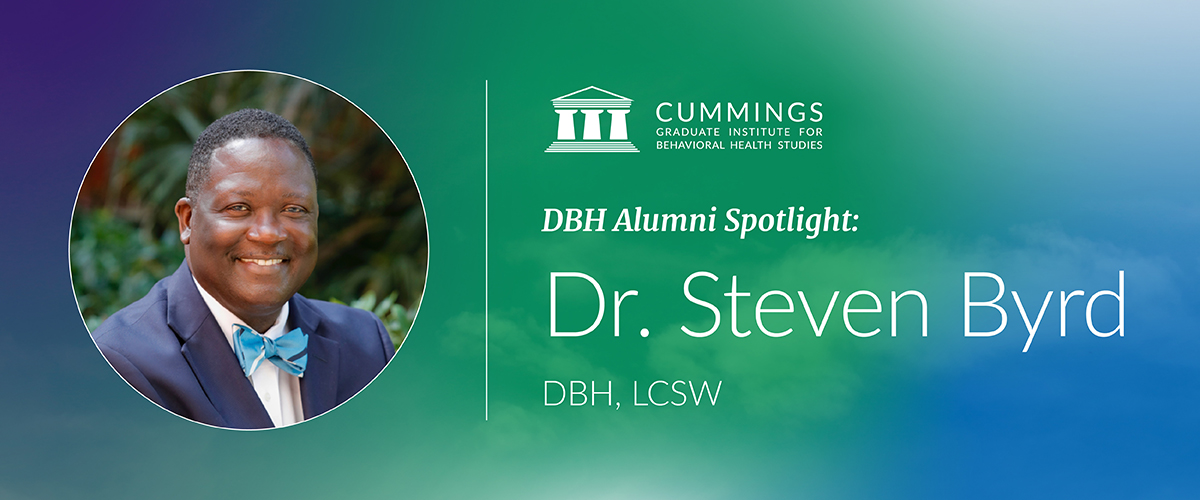
Dr. Steven Byrd, LCSW, DBH, is a licensed clinical social worker and Doctor of Behavioral Health with more than 20 years of experience advancing student wellness and community mental health. A proud Louisiana native, he has served in public and private school systems, central office administration, and higher education, including leadership roles directing counseling and wellness offices at Xavier University of Louisiana and working in health promotion at Tulane University. Dr. Byrd’s career reflects a deep commitment to integrated behavioral health, equity, and community self-sufficiency, values that also shaped his DBH research on behavioral health screening in schools to improve attendance and reduce disciplinary issues. In this interview, Dr. Steven Byrd shares his vision for integrated, community-centered behavioral health, the leadership lessons that transformed how he approaches resistance and change, and his hope for a more equitable, prevention-focused future of care.
How has the DBH journey reshaped the way you see health, healing, and systems of care?
Earning my Doctor of Behavioral Health (DBH) fundamentally reshaped how I understand health, healing, and the systems designed to support them. Prior to this journey, I viewed behavioral and physical health as closely connected but often addressed through parallel pathways. The DBH experience clarified that true healing does not occur in silos—it emerges at the intersection of mind, body, environment, and systems of care.
The DBH curriculum deepened my appreciation for behavioral health as both a clinical and systemic discipline. I came to understand that anxiety, depression, trauma, and stress are not merely individual experiences but are shaped by institutional practices, access to care, cultural context, and policy decisions. This realization shifted my professional focus from solely providing or overseeing services to intentionally designing systems that reduce barriers, promote prevention, and support continuity of care. Health, I learned, is not simply the absence of illness; it is the presence of safety, connection, agency, and support.
Behavioral health is evolving rapidly, what do you believe is the next frontier?
Behavioral health is no longer just about therapy or crisis intervention; the future demands systems that anticipate needs, remove barriers, and embed mental health seamlessly into primary care, schools, workplaces, and community networks.
In addition, a key innovation is community-centered integration, where care is co-designed with patients and populations—especially marginalized communities—to ensure services are accessible, culturally responsive, and sustainable.
What moment from your DBH experience most changed you, personally or professionally?
One of the most transformative moments of my Doctor of Behavioral Health (DBH) journey came during a lecture by the late Dr. Nicholas Cummings on psycho judo. While many lessons throughout the program sharpened my clinical knowledge and leadership skills, this concept fundamentally altered how I approach resistance, conflict, and complex systems—both professionally and personally.
Dr. Cummings introduced psycho judo as the art of leaning into resistance rather than battling it. Instead of confronting opposition head-on, the clinician or leader learns to understand the function of resistance, redirect its energy, and use it to facilitate change. At the time, the idea felt deceptively simple. Yet as I applied it across clinical, administrative, and organizational contexts, its depth became clear.
What change in behavioral health do you most hope to see in your lifetime, and how are you preparing to lead it?
The change I most hope to see in my lifetime is the full and irreversible integration of behavioral health into every layer of healthcare and community systems, where mental health is treated not as a specialty service, but as a core determinant of overall health and human flourishing.
As we move forward, we should continue to prioritize prevention, early intervention, and continuity of care, embedding behavioral health into primary care, academic institutions, workplaces, and community organizations. In this model, access to care is equitable, stigma is reduced, and outcomes are defined by resilience, engagement, and quality of life—not just symptom reduction.
How do you define leadership, and how has your DBH prepared you to lead with courage, empathy, and evidence?
I define leadership as the capacity to create conditions where individuals and organizations can move toward healthier, more equitable outcomes—especially in the face of resistance and uncertainty. True leadership is not about authority or control; it is about stewardship, influence, and the courage to align values with action.
The DBH prepared me to lead with courage by teaching me to question long-standing assumptions about how care is delivered and who it serves. I learned to examine how siloed structures, reimbursement models, and institutional culture often undermine integrated care. DBH are disrupters. We are not afraid to name what is not working and advocate for change grounded in both ethics and evidence.
Every DBH student begins their journey with a “why.” What would you say to those who are just discovering theirs?
To those stepping into this path, know that your lived experience matters. Your clinical work, leadership challenges, and personal encounters with systems of care are not separate from your scholarship—they are central to it. The DBH provides the language, structure, and evidence base to transform lived insight into sustainable change. It empowers you to move from advocacy alone to strategic leadership that transforms systems.
The DBH will strengthen your ability to hold complexity, navigate resistance, and lead change with both humility and resolve. You will learn that meaningful impact requires patience, collaboration, and the willingness to engage opposing viewpoints without losing sight of your values.
At the heart of Dr. Steven Byrd’s story is a deep belief that healing happens not in isolation, but through connection, to people, to communities, and to systems that are designed with care and intention. His DBH journey strengthened his resolve to challenge silos, lean into resistance, and lead with both compassion and courage. As he continues to advocate for integrated, equitable, and prevention-focused care, Dr. Byrd embodies the spirit of the DBH: transforming lived experience into leadership and building systems that help people not just survive, but truly thrive.