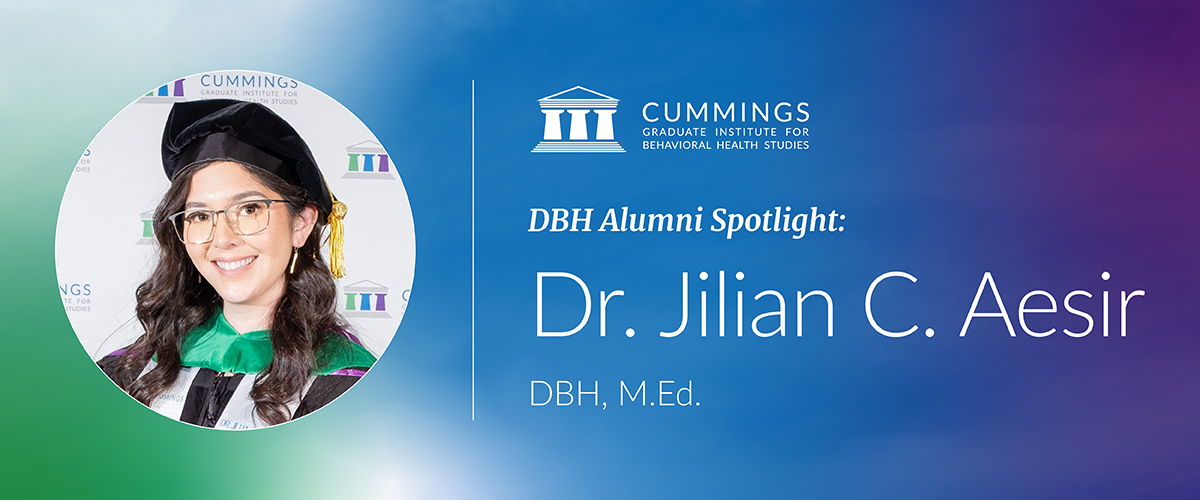
 From Classroom to System Change: How Dr. Jilian C. Aesir Is Reimagining Mental Health Support for Youth
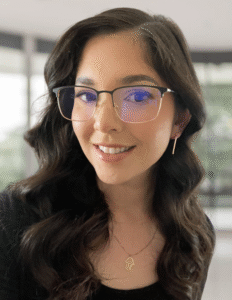
Dr. Jilian C. Aesir is a Doctor of Behavioral Health and educator on California’s Central Coast whose work sits at the intersection of education, population health, and mental wellness. Recognizing that today’s complex sociopolitical climate places unprecedented strain on young people and families, she focuses on systemic reorganization within healthcare to improve the quality and reach of mental health screenings, increase early intervention, and advance prevention as a pathway to reducing adolescent suicidality. In this interview, Dr. Aesir shares her path through the DBH program, what motivates her to advance integrated behavioral healthcare for youth, and how she is working to build more responsive, equitable systems of support.
How has the DBH program influenced your approach to behavioral health?
Completing my DBH has opened up a seat at the table for many crucial discussions regarding mental health services for youths, especially in cases where clear responses to mental health crises must be addressed. The elevated expertise, skills, and connections that I have made allow me to consult effectively with community organizations and school districts that need guidance in improving screening and services for those in their care. It has grown my vision for larger systemic change and provided me with some of the tools and avenues necessary to work towards it.
What are your future career goals, and how do you envision the DBH program contributing to your success?
Although I was always somewhat an outlier in my program as a non-clinician, I am thankful that all I worked with embraced my behavioral health-adjacent passion, as my professional love, first and foremost, is education. I have known since I was a teenager that I wanted to teach, but as I’ve spent the last 17 years of my life in both formal and informal ed., I’ve come to recognize the overwhelming influence of outside factors on a child’s ability to engage with their learning. And while these external pressures are often multifaceted and there are only a handful that I can directly address, I choose to target one close to my heart: adolescent mental health. Understanding that there is no way for me to fully engage my students with their education while they struggle with their own behavioral health experiences, I aim to develop improved systems of support for them by reorganizing their site and district’s mental health programs and by producing a more prepared, equity-grounded healthcare workforce who will be serving them in the future. My hope is that a “both-and” approach, melding my love for STEM education and my students with the fundamental belief that clinical practice must be reformed to better serve our youth, will contribute to a fulfilling career that I can reflect upon with both pride and satisfaction.
 Can you share an experience that shaped your understanding of integrated behavioral healthcare?
While there have been many meaningful experiences for me, I suppose the greatest influence on my DBH journey was the trust placed in me by Dr. Cara English before the program had even begun. I was a non-clinician who had experience with clinical support through my work in my own district’s mental health systems and, although I had a great deal of vetted scientific knowledge and a comprehensive understanding of the systems I hoped to change, I was still not the typical candidate for a clinical doctorate. I recall her phone call shortly after I had submitted my application– she was understandably hesitant about whether I was in the right place. But after a discussion of my aim and the opportunity for me to articulate my “why,” she gave her full support– which has been unwavering since. The recognition of how my vision for mental health services in school actually embraces clinical practice in integrated care, rather than combats it, not only reinforced my understanding of how behavioral healthcare can be delivered, but the role I may play in it as well.
What impact do you hope to make with your DBH in your field and community?
My aim is to help improve the frequency and quality of mental health screenings and services to youths, peeling away just one of many layers preventing them from fully engaging with their education. While I still intend to teach for the entirety of my career–it’s what brings me joy professionally– my scope has developed over the past few years. Now, in my spare time, I have begun to work in data analysis and system reorganization to help NGOs and educational institutions improve the quality of the mental health services they deliver to students and their communities. Alongside a core group of Doctors of Behavioral Health and of Education, I have developed Clarity Clinical Analytics Group which helps institutions by conducting needs-assessments, developing frameworks for healthcare restructuring, implementing clear health outcome measurement procedures, and guiding the implementation of new healthcare policies.
What fuels your passion for advancing integrated behavioral health, and how do you stay motivated?
My students and daughter motivate me every day to build a better world for them.
There are so many perspectives on what it’s like to be an educator, but the reality is that I see these children just about every single day for nine/ten months of the year. I get to know them– their hopes, their fears, their strengths, their struggles, and it’s my job to help them grow as best as I can. Admittedly, I grow alongside them. But I also notice when students are preoccupied; are sad; are grieving; are confused; are struggling; are lost. Most importantly, I notice when they are not there. Every empty seat means something, and it impacts a class or a school in a number of ways– especially when suicidality becomes a factor. And while I can’t address all of the components that contribute to these challenges, I can do my best to support where I can, even if it means rebuilding systems that can do it better than I, in my capacity as their educator.
When I look at my daughter, our schools, and the state of the world, I have hope but I also have fear. While I do my absolute best to be the parent she needs, I recognize just how big of a village it takes to raise a healthy, well-rounded child. My hope is to create educational systems for her and those around her that promote strong mental-wellbeing, can help identify early students who need support, and then properly provide or refer for support to help them effectively navigate their health. Because as the world rapidly changes around us, she and the rest of our youth are going to need it.
What advice would you give to prospective students or professionals considering the DBH program?
I would encourage any student to find what matters to them and let it be their anchor throughout the work. Clear vision and goals help keep you motivated even when the program begins to weigh heavy on you. When you remember why you started, it’s easier to push yourself to finish strong during that final stretch. Knowing what I wanted to accomplish before I entered the program also allowed me to better articulate my goals with my instructors, and often resulted in being permitted to tailor my many assignments to meet the course outcomes but through the lens of my research focus, allowing me to better hone my expertise as I delved into the clinical knowledge expected within the program.
An equally important component is to find your people within the program. As someone who pushed myself to move up through a few cohorts in my time at CGI, I kept the friendships (and the camaraderie) with me the whole time. We encouraged and supported each other, struggled and succeeded alongside one another, vented and laughed together. Many of us still keep in close contact after we defended – some of us still text weekly, video chat, and even travel to visit each other.
Through her leadership, scholarship, and advocacy, Dr. Jilian C. Aesir is translating vision into tangible change, helping communities strengthen how they identify need, respond to crisis, and sustain meaningful mental health support for young people. Her work reflects a steadfast commitment to building environments where students are seen, supported, and empowered to thrive. The Doctor of Behavioral Health program further expanded her capacity to engage in this work at scale, providing the systems-thinking, analytic skills, and professional credibility to extend her influence beyond individual classrooms and into broader organizational and policy-level efforts. Together, these experiences position Dr. Aesir to continue shaping the future of behavioral health in ways that are thoughtful, collaborative, and deeply human-centered.
Connect with Dr. Jilian C. Aesir
Dr. Jilian C. Aesir Contributes to Upcoming Book: Integrated Behavioral Health: Applying the Biodyne Mindset in Healthcare
Cummings Graduate Institute for Behavioral Health Studies (CGI) is proud to announce the upcoming release of the groundbreaking new book, Integrated Behavioral Health: Applying the Biodyne Mindset in Healthcare, set for publication in January 2026. This new book builds on the foundation laid by Dr. Nicholas A. Cummings and Dr. Janet Cummings, renowned psychologists and co-founders of both the Doctor of Behavioral Health (DBH) degree program and CGI, who previously introduced the influential Biodyne Model in their seminal work Refocused Psychotherapy as the First Line Intervention in Behavioral Health.