 New Podcast Episode Explores Integrated Care Approaches for Women’s Mental Health
In the latest episode of Disruptors at Work: An Integrated Care Podcast, special host Dr. Allison Earl, Doctor of Behavioral Health (DBH) program alumna at Cummings Graduate Institute for Behavioral Health Studies (CGI), reminds us that women’s mental and physical health cannot be separated, especially during high-stress periods. Featuring insights from Olivia Mikel, DBH program student, and Dr. Brandy Biglow, DBH program alumna, the discussion explores how integrated care models can better support women facing challenges such as anxiety, depression, perinatal mood disorders, and postpartum stress. With more than one in five women in the United States experiencing a mental health condition each year, this episode examines practical strategies, real-world barriers, and innovative approaches for delivering coordinated, whole-person care.
Thank you to our subject matter experts:
-
-
- Dr. Leslie Allison Earl, DBH, LBHP, LPC-S
- Olivia Mikel, LPC Candidate
- Dr. Brandy Biglow, DBH, LMHC, CCTP, QS
-
About the Subject Matter Experts:
Dr. Leslie Allison Earl, DBH, LBHP, LPC-S
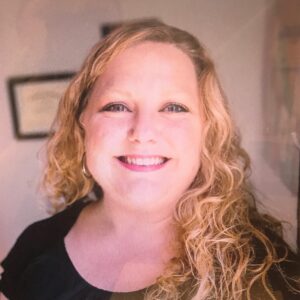 Dr. Leslie “Allison” Earl is a Licensed Professional Counselor in Oklahoma City, OK serving OKC and surrounding areas. Dr. Earl is also a licensing supervisor for LPC Candidates. She earned her master’s degree from the University of Oklahoma, focusing on Human Relations in Counseling and completed her Doctor of Behavioral Health degree with Cummings Graduate Institute for Behavioral Health Studies. Dr. Earl hails from the great state of Texas. She chose teaching as a career and soon after, realized her love for healthcare. She felt that working in a clinical setting would be an immeasurable improvement over serving in the classroom. She soon began working with Dr. Ford at Hands To Guide You and fully realized her passion to become a changemaker in healthcare. She believes integrated care is the key to identifying the root cause of illness, therefore gaining insight on how to best treat the whole person.
Dr. Earl is known for her work in the women’s health field in the greater Oklahoma City area. She is also a Certified Clinical Trauma Professional, Certified Autism Spectrum Disorder Clinical Specialist, and produces weekly content she calls “Therapy Thursday,” covering various topics. Dr. Earl has presented in Norman, OK at the NACT meetings and other venues talking about women’s health and integrated care. She also served as one of CGI’s brand ambassadors for the Spring 1 semester, 2022. Dr. Earl presented at the 2023 CGI Integrated Care Conference on her culminating project, Women’s Health Solutions, LLC, and on Trauma and Autism. Dr. Earl was chosen as a Designated Woman of Distinction in 2020 and has multiple published works. Dr. Earl was published in the CGI newsletter for Trauma, Pregnancy, and the Brain: A Clinical Pathway, Psychedelics in Mental Health where her paper was used to develop a psychopharmacology module, Special Topics paper was published in the newsletter, two articles, and Trauma and an Autism Diagnosis.
Olivia Mikel, LPC Candidate
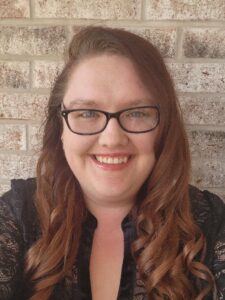 Olivia Mikel is an LPC Candidate at Hands to Guide You. She graduated from Mid-America Christian University in 2020 with a bachelor’s degree in psychology and later earned a Master of Science with an emphasis in Clinical Mental Health Counseling from Mid-America Christian University. She is currently a Doctor of Behavioral Health candidate at Cummings Graduate Institute for Behavioral Health Studies. Olivia believes that life comes with many challenges, and she is committed to being on the front lines to help patients get where they want to be. She began her career in healthcare as a certified nurse assistant in 2012 and brings over 10 years of experience in the healthcare field. In 2021, she transitioned into mental health and has since worked toward advancing integrated care in the state of Oklahoma. Olivia strongly believes that physical care and mental health care must be viewed as one, healthcare, so patients can receive the gold standard of care.
Dr. Brandy Biglow, DBH, LMHC, CCTP, QS
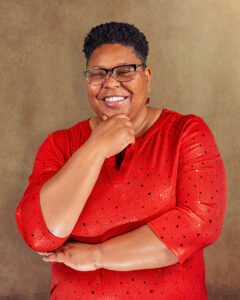 Dr. Brandy K. Biglow is the CEO and co-founder of Renovation Integrative Health, LLC. She has served as a mental health professional for 12 years, where she has supported others in her role as a counselor, clinical supervisor, and licensed clinical program manager. She is a licensed mental health counselor and supervisor for mental health and marriage and family therapists in Florida. She is a certified clinical trauma professional, certified individual coach, certified group coach, and burnout expert. Prior to her career in mental health, she educated and supported students as a certified K-12 Exceptional Education teacher for 10 years.
Brandy is passionate about her work and supporting people on their mental health journey. In her practice, she uses an integrative health approach infused with humor, empathy, and current information from research (anecdotal and qualitative). She is culturally competent and trauma informed, meeting each person where they are and how they show up regardless of how they identify. She continues her transition into consulting and coaching where she is developing programs and courses aimed at eliminating occupational burnout. She will continue to support patients in mental health as well. Her long-term goals are to open an integrative health clinic. She is also working on projects with her colleagues to further advance behavioral integrated health in the United States and abroad.