NewsPress

How CGI’s DBH Admissions Process Supports Future Change-Makers

By January 26, 2026No Comments5 min read

Pursuing a doctorate is a significant decision, and the admissions process should feel supportive, transparent, and aligned with a student’s goals. For prospective Doctor of Behavioral Health (DBH) students, the admissions experience at Cummings Graduate Institute for Behavioral Health Studies (CGI) is designed to reflect the same values that define the program itself, intentionality, flexibility, and a commitment to meaningful change in healthcare.

According to Director of Admissions Cece Maez, the DBH admissions process is intentionally holistic. “We choose to look at an applicant holistically,” she explains. “We know that you may have been out of school for 1 year to 30 years, and we are there to answer your questions along the way.” Rather than focusing solely on metrics, the admissions team prioritizes understanding who applicants are, where they’ve been, and what they hope to accomplish through the DBH.

The application process itself is built with working professionals in mind. “All documents can be uploaded in our application and do not need to be sent via multiple emails,” Maez shares. “Our application auto-saves so that you can complete it around your busy schedule as well.” Applicants are also given time. “We allow students up to one year to complete the application,” she adds. “We built this timeline to fit in your busy schedule.”

When reviewing applications, passion and purpose matter. “We are looking for someone who is really passionate about integrated healthcare and being disruptors,” Maez says. She emphasizes that strong applicants often come in with lived experience and a desire to improve systems they’ve worked within.

“In your time in the field, did you notice something broken that needed fixing? Were you someone that looked to fix a situation that needed to be fixed? We are looking for those that seek change and innovation.”

Attention to detail is also part of the evaluation. “While you are filling out the application, please take your time,” Maez advises. “We see so many people rush their applications and have spelling, grammar or formatting errors. It gives us the impression that the application was not worth taking the time to edit or review before submitting their materials.” For the admissions team, quality reflects commitment. “We spend a great deal of time reviewing these applications and we hope the applicant takes the time to check for quality as well.”

The interview process is designed to feel like a conversation, not a test. “Our questions were created not to trap or confuse our applicants,” Maez explains. “We want to know your ambitions, your communication skills, your ability to think critically, your plans during the DBH program, what you are excited to study, the population you hope to help, how you’ll disrupt your community after completing the program.” The goal is mutual clarity. “This lets us know if we are the right fit for them and if they are the right fit for us.”
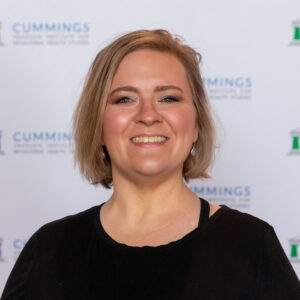
Admissions and Enrollment Coordinator Karrie Miller reinforces that support is continuous and personal. “We are here and ready to answer any and all questions the applicant may have through the entire process,” she says. “We can communicate through whatever modality works best for them, whether it is email, text, phone, or video chat.” For many applicants, that accessibility makes a difference.

“We understand this is a major life and educational decision, and are excited to walk alongside the student to make it as comfortable and informative as possible.”

Miller also addresses a common misconception. “While this program is entirely online, it is not easy,” she says plainly. “This is a Doctoral program.” She notes that applications sometimes reflect the assumption that online means less rigorous. “We are looking for applicants ready to work and make a change in the Behavioral Health field, and who recognize the importance of first impressions through that application.”

After completing the application and onboarding process, applicants often comment on the experience itself. “Communication is key,” Miller shares. “There are real people, not AI or bots, waiting to hear from you. We genuinely want to help and want you to experience the close-knit community before you login to your first class.”

Helping applicants determine whether the DBH aligns with their lives and goals is a shared priority. “How will this degree work into your current home and work schedule?” Miller asks. “Do you have the time and ambition to take on this degree program?” These conversations are intentional. “By the time the applicant becomes a student, they are fully aware of what to expect and how to incorporate this degree program into their lives.”

The admissions team approaches each applicant with care, curiosity, and respect for the journey that brought them here. The process isn’t just about acceptance, it’s about readiness, alignment, and preparing future leaders to step confidently into a program built for disruption, innovation, and real-world impact.


Testimonials

As a member of the AAPI community, I’m very familiar with the barriers to mental health services and the need to break through the glass wall of cultural stigma that prevents many from receiving potentially life–saving treatment. I was the only Asian American person in my master’s cohort, the only Asian American person in many of my clinical work settings, the only Asian American person to walk into many of the professional settings that I pushed myself to show up to. In my current practice, I’m constantly reminded by my patients of how difficult it is to find an Asian American mental health provider, though this reminder constantly informs me that more needs to be done for my community. Day after day, I read stories of Asian American people who die by suicide as a consequence of our culture’s avoidance of mental health topics. As a DBH, my biggest goal is to use my expertise in whole–person care to amplify the conversation around mental health and help my community understand that mental healthcare is not a privilege that we are not entitled to, it is a crucial part of our healthcare that will manifest differently in us than what many Western psychology or psychiatry textbooks will describe, and that our unique experience of mental health issues are valid, important, and is time to be part of the larger conversation.

Willam Chum, LMHCDBH Candidate, Cummings Graduate Institute for Behavioral Health Studies - September 16, 2022

The Doctor in Behavioral Health (DBH) program has changed my understanding of the subject and career path. Before this academic journey, my knowledge of behavioral health was primarily theoretical, including essential ideas and methods. However, the DBH curriculum combined intense academic research with practical application, helping me understand behavioral health from multiple angles. Recognizing mental health as part of total health changed my perspective. The biopsychosocial model, which showed how biological, psychological, and social variables affect mental health, was stressed in the DBH curriculum. This comprehensive approach made me realize how complex human behavior is and how important it is to address mental health issues. Effective interventions must target the individual’s surroundings, relationships, and life experiences, not just symptoms. The curriculum also gave me enhanced evidence-based practice training to execute successful solutions. Studies methods and data analysis classes improved my critical thinking and allowed me to evaluate and apply behavioral health studies. This gave me the confidence to contribute to the field’s knowledge base through practice and research.

Dr. Rhea Hill, DBH, LPCDBH Alumna, Cummings Graduate Institute for Behavioral Health Studies - February 17, 2025

This program will change how you present to the world, not just as a professional but as an individual. Understand this is work but the work is worth it and the journey is undeniably transformative. If you are seeking a doctorate for the title, this is not the program for you. If you are seeking a doctorate to interrupt and disrupt the course of healthcare, then this is the program for you. You won’t find a more supportive program with professors who are dedicated to your success and your education. This program is not about the regurgitation of information. It is about the appropriate applied application of knowledge and information to push forward and become an advocate for equitable and quality care for all.

Brandy K. Biglow LMHC, CCTP, QSDBH Candidate, Cummings Graduate Institute for Behavioral Health Studies - February 5, 2024

The Doctor of Behavioral Health (DBH) program has definitely transformed my understanding of behavioral health. Understanding the links between physical and mental health has taught how to make better treatment decisions. The DBH program has also given me insights that otherwise would not be possible and allows me to view individuals through a lens that I was previously ignorant of. This program has helped me grow into a more confident individual, provider, and parent.

Cory H. Cannady, BCBA, LBADBH Candidate, Cummings Graduate Institute for Behavioral Health Studies - March 13, 2024

The DBH program has reinforced my vision of viewing behavioral health (BH) as an integrated component of the healthcare system rather than a siloed service. As a practitioner in the focused BH realm of substance use disorder (SUD) treatment, I observe on a regular basis how identifying and serving SUD patients is often missed, ignored and stigmatized in primary healthcare, despite the fact that early intervention at these check-points often has the potential to intervene earlier and lessen the negative SUD outcomes frequently seen by the time a patient reaches specialty SUD services. Reinforcement received in my DBH program has motivated me to promote integration as a leader in my workplace and is a primary factor in considering the long-term trajectory of my individual career path.

Kenneth L. Roberts, MPS, LPCC, LADCDBH Candidate, Cummings Graduate Institute for Behavioral Health Studies - November 5, 2024

Graduating from the DBH program has influenced and enhanced my approach to addressing behavioral health challenges and making a difference in the field by preparing me to become a serious business owner. Through the DBH program, I understand now that becoming a business owner not only assists me in reaping the financial benefits of working for myself, but the program also offers me a sense of freedom to make a difference in an individual’s life.

Dr. Rebecca K. Wright, DBH, LBA, BCBA, QBADBH Alumna, Cummings Graduate Institute for Behavioral Health Studies - December 18, 2024

I have always wanted to pursue a higher degree but never found a program that met my needs. When I investigated the DBH program, I can honestly say I was excited. It was a program that would expand my knowledge in behavioral health but also how it relates to physical health. The philosophy of treating the whole person was exactly what I was looking for.

Elizabeth Nekoloff, M.Ed., LPCC-S, NCCDBH Candidate, Cummings Graduate Institute for Behavioral Health Studies - January 16, 2025

Prior to obtaining my DBH, I practiced behavioral health within the boundaries of behavior analysis. The DBH degree has given me the ability to broaden my scope of competence allowing me to provide a higher quality of care to my clients through a person-centered approach, while still staying within my scope of practice. I was in the beginning stages of opening my business when I enrolled in the DBH program which set my trajectory towards being a stronger leader. The program equipped me with essential healthcare leadership and entrepreneurial skills, allowing me to ensure high-quality services for my clients and foster a supportive work environment for our staff. It has also given me the confidence to expand my business and pursue other healthcare ventures, reaching a broader range of patients in need.

Dr. Pauline Tolentino Pablo, DBH, BCBA, IBADBH Alumna, Cummings Graduate Institute for Behavioral Health Studies - January 21, 2025

Although I have worked with many patients who have mental health diagnoses, or behaviors which make managing their medical diagnoses and day to day life difficult, the DBH program at CGI is broadening that knowledge and providing a deeper understanding of behavioral health and how best to help these individuals manage their health and improve their quality of life. This will allow me to provide and advocate for more meaningful and seamless integrated care, providing new tools for my intervention toolbox, and the confidence and skills to collaborate within and lead whole person focused interdisciplinary teams. I also anticipate building upon my knowledge as a nurse case manager and long time caregiver, as well as my personal passions and professional vision, learning about processes and operations, to be in position to start up and lead my own company one day, offering the services and care I know every person should have access to.

Hollie Wilson, MSN, RN, CCMDBH Candidate, Cummings Graduate Institute for Behavioral Health Studies - February 11, 2025

The DBH program will open opportunities for me to contribute to healthcare system innovation, particularly through trauma-informed care and integrated behavioral health settings. I will be better positioned to advocate for and implement holistic care models that improve health outcomes for underserved populations. Ultimately, this program will help me transition into higher-level roles, such as a director or consultant in behavioral health, where I can influence broader system changes and contribute to the future of healthcare delivery.

DeKyn Rashad Peters, MPH-CHES,BSW/BA,APCDBH Candidate, Cummings Graduate Institute for Behavioral Health Studies - March 4, 2025

Accreditation & Affiliates

Partners