 Transforming Care for Neurodivergent Communities: Nicole Heuer’s Approach to Neurodiversity-Affirming Behavioral Health
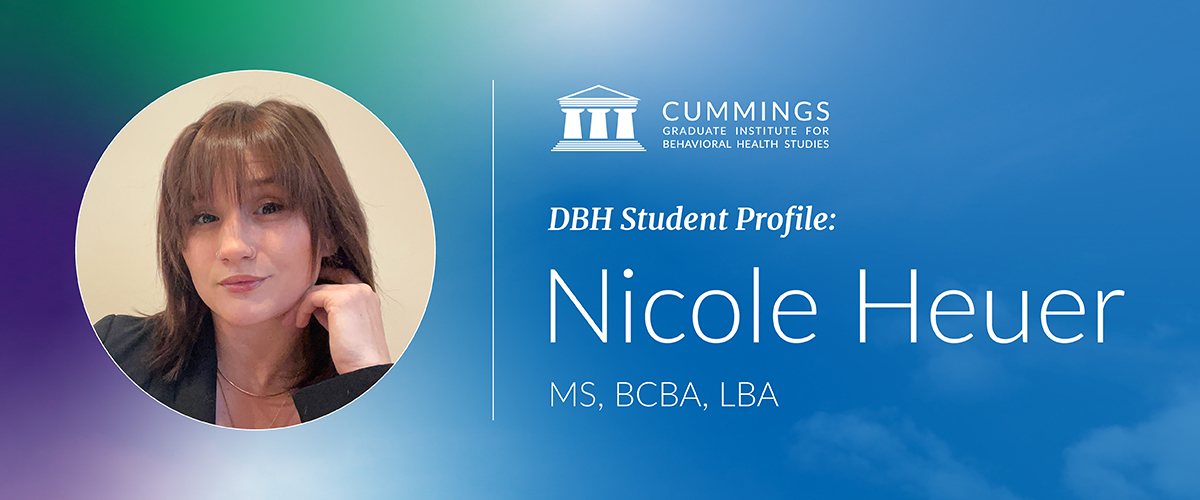
Nicole “Nikki” Heuer is a school-based Board Certified Behavior Analyst (BCBA) in New York who specializes in supporting neurodivergent students in inclusive educational settings. Her work centers on practical, compassionate behavioral support that helps students build independence, communication, and self-advocacy skills, while collaborating closely with teachers and families. Grounded in neurodiversity-affirming practice, she views behavior as communication and emphasizes supports that respect individual differences while expanding access to meaningful learning and social opportunities. As an autistic adult, Nicole’s lived experience plays a central role in shaping her perspective and approach. Through her doctoral studies, she has explored disparities in autism diagnosis and access to appropriate supports, factors contributing to a growing mental health crisis within the autistic community. This work informs her commitment to building more responsive systems of care that allow neurodivergent individuals to thrive. In this interview, Nicole shares how the DBH program has shaped her approach to systems-level change, her focus on improving outcomes for autistic individuals through more adaptive care models, and the personal experiences that continue to drive her work in integrated behavioral health.
How has the DBH program influenced your approach to behavioral health?
The DBH program has shifted my perspective from theoretical understanding to practical systems change. Prior to entering the program, much of my work focused on supporting individual students and families in school settings as a Board Certified Behavior Analyst. I could clearly see the flaws in the systems and the gaps in treatment, but I did not fully understand how those systems could realistically change. At times, it felt like the only option was to dream big without knowing the concrete steps needed to make those ideas possible.
One of the most impactful aspects of the DBH program is the way it guides students through identifying a real problem, analyzing the structural factors contributing to it, and developing a feasible intervention pathway. Rather than remaining abstract academic exercises, the projects we develop are designed to be implementable in real-world healthcare and community settings. As I worked through these projects, I realized that what initially felt like “just a paper” was actually a roadmap that could be translated into practice.
The program has allowed me to think beyond individual interventions and toward sustainable, systemic solutions. It reinforced the idea that meaningful change in behavioral health requires not only clinical expertise, but also the ability to design programs, build partnerships, and translate research into actionable strategies. The DBH program has helped me realize that meaningful change in behavioral health is not something reserved for someone else to accomplish. It is something I now feel prepared to help create.
What are your future career goals, and how do you envision the DBH program contributing to your success?
My primary professional and academic interests in behavioral health center on autism and the systemic disparities that affect how autistic individuals experience healthcare and mental health treatment. Despite significant research, there remains a significant gap between what we know about autism and how care is actually delivered. Providers often receive little training on how autism impacts communication, sensory processing, routines, and regulation, yet these factors influence every part of treatment, from how instructions are understood to whether someone can participate consistently in care. When these needs are not considered, treatment fidelity and adherence decrease, and outcomes suffer.
Statistics consistently show higher rates of treatment failure, disengagement, and poorer outcomes within the autistic community. Too often, these outcomes are framed as individual limitations rather than signals that systems of care need to adapt. My work focuses on helping shift that perspective by developing practical frameworks that support physicians, specialists, and behavioral health providers in adapting treatment to better meet autistic needs. Many of the same principles, such as adjusting communication, accounting for sensory needs, supporting predictable routines, and recognizing the mental health impact of chronic stress and masking, can be applied across specialties. My goal is to help create systems where autistic individuals have the same opportunity for successful treatment outcomes as our neurotypical peers, not because we change who we are, but because care evolves to support how we experience the world.
Can you share an experience that shaped your understanding of integrated behavioral healthcare?
My journey in the DBH program has not always been easy, but it has been one of the most transformative experiences of my life. Early in the program I was doing well academically, but outside of school I was struggling to manage the stressors of daily life. It was not the program itself that became overwhelming, but everything around it. Eventually I made the difficult decision to withdraw because I felt truly lost and unable to keep up with everything. That period forced me to step back and ask deeper questions about why things felt so hard despite all the effort I was putting in.
During that time, the program itself had planted a seed that led to a major turning point in my life. My studies and the perspectives I was being exposed to pushed me to seriously explore something I had wondered about for many years, whether I might be autistic. Pursuing that evaluation and receiving my autism diagnosis changed my life in ways I could not have predicted. Instead of continuing to rely only on traditional talk therapy and medication management, I began learning how to understand and support my own needs as an autistic adult. I started identifying areas where I had been masking, recognizing patterns that were contributing to autistic burnout, and making intentional changes to reduce stress and build a life that worked better for me.
When I returned to the DBH program, I came back with a completely different perspective. I understood myself better, and I also understood exactly why this work mattered so much to me. Integrated care is not just a theory or a framework I study, it is something that has directly shaped my own ability to function, recover, and move forward. My experience showed me how powerful it can be when care actually recognizes the whole person and adapts to their needs.
I had to go through that process to understand what I needed for myself. But what drives me now is the belief that others should not have to struggle for so long to reach the same understanding and support. The DBH program has given me the tools to take that experience and turn it into something meaningful for others. It helped me see that real systems change is possible, and that the work we do here can reduce suffering and create pathways for people to live healthier, more sustainable lives.
What advice would you give to prospective students or professionals considering the DBH program?
My advice to anyone considering the DBH program is simple, just do it. When I first started the program, I had a lot of doubt about whether I truly belonged there, especially surrounded by so many accomplished and distinguished professionals. It can be intimidating to step into a space where people bring such extensive experience and expertise. But what I quickly learned is that you do belong. Every person in the program brings a unique perspective shaped by their professional background, personal experiences, and the populations they serve. Those differences are not just welcomed, they are what make the program so meaningful.
One of the most remarkable aspects of the DBH program is its flexibility. It truly becomes what you make of it. Whatever your passion is, whether that is improving clinical practice, addressing health disparities, designing new care models, or advancing systems-level change, the program gives you the space to pursue it. The projects are not just academic requirements; they are opportunities to develop real ideas that can translate into meaningful change. If you come into the program with curiosity, openness, and a willingness to grow, it will push you in the best possible ways and help you see how your unique perspective can contribute to the future of behavioral health.
Nicole Heuer’s work reflects a growing shift in behavioral health toward more inclusive, responsive systems of care. Through the DBH program, she has gained the tools to translate lived experience and clinical insight into actionable change. The program has strengthened Nicole’s ability to think beyond individual support and influence how care is designed and delivered. She is applying these perspectives to improve access, engagement, and outcomes for neurodivergent individuals. Through this work, she is helping shape more adaptive systems that better reflect the needs of the communities they serve.
Connect with Nicole Heuer
What Nicole Heuer Hopes to Achieve Through the DBH Program
Explore Nicole Heuer’s Achievements as a DBH Student

CGI Experts to Present at ICIC26 in Birmingham, UK
Cummings Graduate Institute for Behavioral Health Studies (CGI) is proud to announce that faculty members and Doctor of Behavioral Health (DBH) students and alumni will be presenting at the 26th International Conference on Integrated Care (ICIC26), taking place April 13–15, 2026, in Birmingham, UK.

CGI DBH Students Receive APSA Lifelong Learning Scholarship
Cummings Graduate Institute for Behavioral Health Studies (CGI) is pleased to announce that Nicole Heuer and Victoria Williams, students in the Doctor of Behavioral Health (DBH) program, have been awarded the Arizona Private School Association (APSA) Lifelong Learning Scholarship. The recipients were formally recognized during the APSA Annual Conference luncheon held on Friday, October 10, 2025.