 Finding Coherence Amid Crisis: Samuel Louis Williams Connects Care, Data, and Human Experience
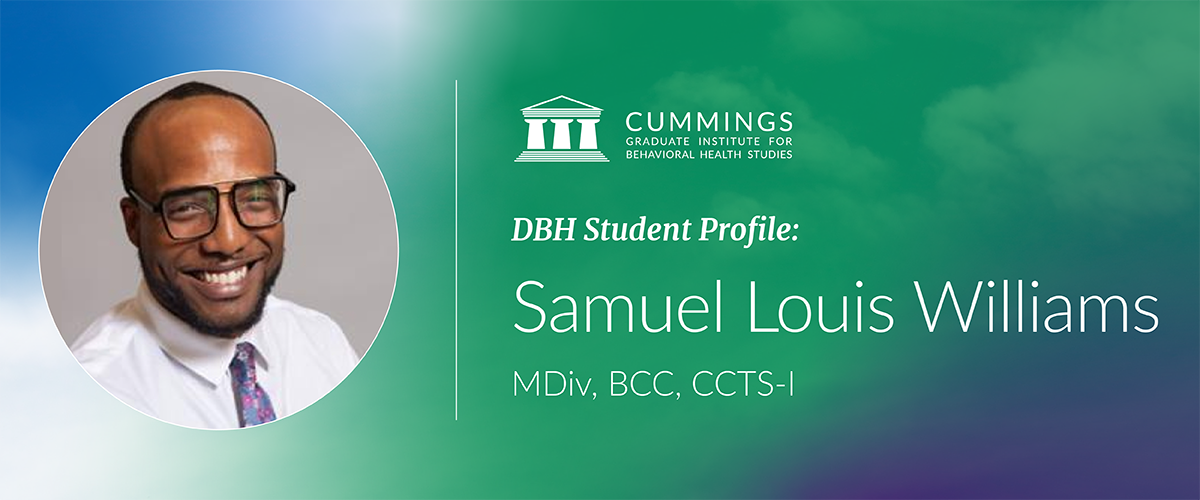
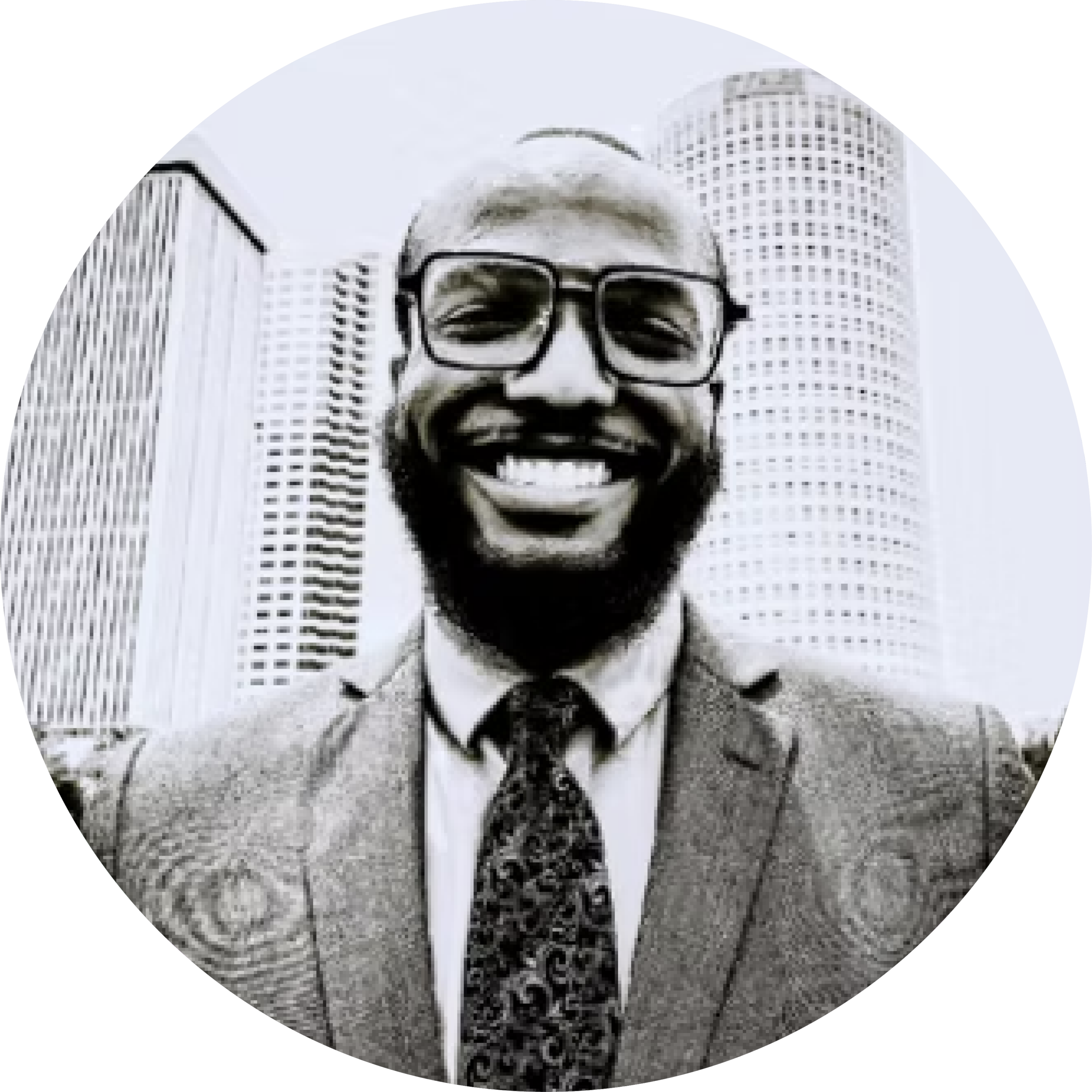
Samuel Louis Williams is a board-certified overnight hospital chaplain who has served at a Level I trauma center in Florida for 11 years. Alongside his work in healthcare chaplaincy, he has built a career in sales, advancing from sales representative to CEO while applying principles of psychology and behavioral health to leadership and business. Driven by a passion for helping people regain stability after overwhelming life events, Samuel founded Connecting Humans Mobile Chaplaincy (CHMC) to address gaps in support following the death of a loved one and other major life transitions. CHMC, the first bereavement and life transitions social media platform, is designed to foster community, support greater internal stability and integration over time, and help individuals build resilience under high levels of stress and disruption. He is also the creator of Emotional Field Theory (EFT), an emerging framework for understanding how people process disruption and build stability over time. Through his work, Samuel seeks to bridge the gap between lived experience and structured models of behavioral health. He is the father of a daughter, Gabriella, who inspires him to be better today than he was yesterday. In this interview, Samuel shares how the DBH program has strengthened his approach to high-acuity care, supported the development of Emotional Field Theory, and helped him explore new ways to connect lived experience with measurable behavioral health data.
How has the DBH program influenced your approach to behavioral health?
The DBH program at CGI has become an invaluable asset in the processing and integration of best practices regarding behavioral health skills, academia, and clinical support. Due to the skills and knowledge I have been able to integrate into my career, I find a greater ability to provide superior care even in the most acute clinical presentations. Systemic application being one of the primary foci, I have been able to utilize the assignments to develop my internal models and identify resources for the future. In addition, I find the DBH has provided excellent structure for my continued growth professionally and academically. Not only are there very many resources to utilize, but the collective wisdom and flexibility of those teaching provides clear guidance for those returning to academia after decades of professional work.
What are your future career goals, and how do you envision the DBH program contributing to your success?
Primarily, my interest is in improving stability and coherence of individuals under sustained disruption load. I find that being able to get a firm grasp on current best practices is essential to delivering quality care and developing Emotional Field Theory (EFT) further. As EFT functions as a mathematical tool, it becomes an invaluable asset only if stress-tested and applied in real world scenarios routinely. Evidence-based approach, then, becomes a viable path towards improving novel systemic models, understanding limitations, and applying as indicated.
Initially, I began looking for ways for Connecting Humans Mobile Chaplaincy (CHMC) chaplains to have a consistent intervention tool we could scale. Through this process, I began developing a model, EFT, whose first law is, “Transformation Formula”. Where, Transformation = (M) Meaning Making Capacity x (R) Relational Support Intensity x (N) Neurological Plasticity divided by (D) Disruption Load + 1.
Expressed as:
T = (MxRxP) / (D+1)
Also formatted:
After discovering this formula, many pieces started falling in place; from identifying emotions through time, to how mathematically emotions and coherence presents as a waveform. After initial case studies in a high acuity environment, EFT has proven its value in organizing seeming chaos into a unified model of coherence with consistent reliability in early applications. With each case study and applying of the model we learn more. As a result, I feel a rising pressure to catalogue my findings so that others who eventually pursue quantifying coherence have notes to start with. From Substack to White Papers I have begun focusing on sharing what I’ve learned. EFT has given me a new focus; using my career and furthering education to gain greater understanding of coherence, measure it accurately, and develop intervention strategies based on best practices has become an irreducible element of my life’s work.
Can you share an experience that shaped your understanding of integrated behavioral healthcare?
A memorable experience that helped to shape my experience so far is being able to incorporate personal curiosities into assignments. Recently, due to a literature review assignment, I was able to synthesize research on measuring disruption “(D)” through biomarker data collected from wearables. The research question was, “How can somatic processes and data collected from consumer wearables be extrapolated as a multi-faceted model to deduce subjective disruption load related to individual regulatory baseline?”
Key findings from this review include the following:
We can measure stress through biomarkers objectively, but there is no current mechanism in place to answer what stress means to the individual subjectively.
At present the field is stuck between objectivity and subjectivity without being able to integrate both into a unified model.
Due to lack of unified framework, there is a major conceptual gap in attempting to make sense of the data
This data collected from the review will be used to develop innovations, specifically, Grief Trauma Index- Scientific (GTI-S); where we can utilize the data to track disruption (D) and coherence (MRP) in real time, allowing for structurally based engineered interventions. Currently, thanks to this DBH program and project, we have made great progress towards processes to identify coherence in real time without the need for subjective report. As a result, once completed, GTI-S becomes an invaluable tool that can united experienced phenomenology to empirical data.
 What fuels your passion for advancing integrated behavioral health, and how do you stay motivated?
What drives me is a need to understand. Throughout life I had found humans perplexing and difficult to follow. Because of this seeming disconnect between actions and logic, I would feel unmoored in social or high pressure situations. There seemed to be chaos everywhere, but when I was able to find certain patterns things started to make more sense. Now, having been able to develop Emotional Field Theory (EFT) and many of it’s implications, I find a new passion in discovery. Behavioral Health is a largely unexplored domain due to its complexity. However, I believe with robust models based on mathematical best practices, we can resolve much of the confusion that currently exists. Instead of litigating the same philosophy of millennia gone by, we can start asking new questions. Questions such as, “What happens when humans understand the structure of resilience and embody it?” and “When a large population of highly resilient humans, how does sociology and group dynamics respond globally?”
What advice would you give to prospective students or professionals considering the DBH program?
I have found that if you want to do something, you should do it. If you are thinking about moving forward, but are delaying, you only do yourself a disservice. The years will go by. Ultimately, doing what you find meaningful and fully experiencing it, mathematically, is the key to a fulfilled life. Avoidance of disruption only creates more compounded disruption through time. If, however, you move forward with the DBH program, and integrate the lessons taught, when you look back over your life you will see radical growth, greater coherence, lessened reactivity to incoming disruption, and more confidence to meet the challenges of life head on. With DBH you learn about yourself. After DBH integration you become a stronger version of yourself.
Through his work in healthcare chaplaincy, leadership, and the development of CHMC and Emotional Field Theory, Samuel Louis Williams is focused on helping people navigate disruption, build resilience, and achieve greater stability over time. His experience in the DBH program has strengthened this work by providing opportunities to integrate evidence-based research, systems thinking, and academic inquiry into his professional practice and emerging frameworks. As he continues to explore new ways to connect lived experience with measurable behavioral health data, Samuel is applying his DBH education to advance his career, deepen his impact in high-acuity care, and develop innovative approaches to understanding and supporting human resilience.