 Leading With Culture and Compassion: How Serah W. Muiruri is Driving Community-Centered Care
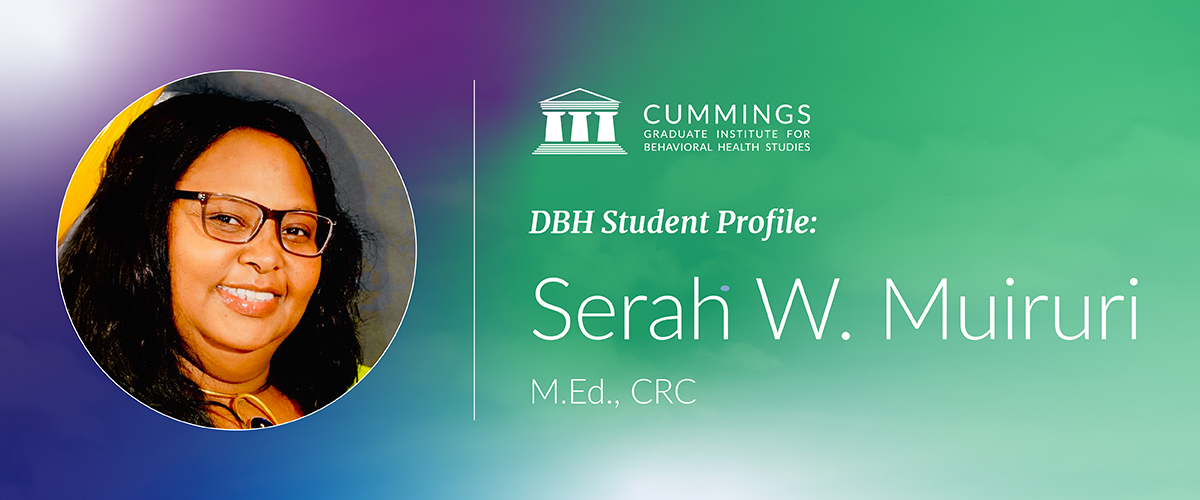
Serah W. Muiruri is a Certified Rehabilitation Counselor, master’s-level clinician, and Doctor of Behavioral Health (DBH) student at Cummings Graduate Institute for Behavioral Health Studies. She currently serves at Nonotuck Resource Associates, Inc., where she supports children and adults with complex behavioral health and cognitive challenges, including autism spectrum disorders, psychiatric conditions, and acquired brain injuries. Grounded in trauma-informed care, her work focuses on helping individuals and families navigate intergenerational trauma and build resilience. In addition to her clinical practice, Serah is a Certified Life Coach and founder of Limitless Success and Wellness, LLC, an accomplished author of multiple books on resilience and mental health, and an advocate for the Kenyan community in the United States. As she completes her DBH, she is focused on creating meaningful, systems-level change that expands access to culturally responsive, integrated care. In this interview, Serah shares how her work centers on culturally responsive, trauma-informed integrated care, amplifying immigrant voices, strengthening community resilience, and advancing systems that honor culture while improving access and outcomes.
How are you using your behavioral health expertise to impact your local community?
My work in behavioral health has been deeply shaped by my commitment to addressing trauma among African immigrant communities. Through my culminating project, I have focused on understanding the impact of trauma on African immigrants and the protective role of cultural resilience in promoting mental and physical health outcomes. In my local community, I actively contribute by engaging with individuals and families navigating post-immigration challenges, including acculturation stress, intergenerational trauma, and barriers to accessing behavioral health services.
I collaborate with local organizations, including community-based agencies and immigrant support groups, to provide psychoeducation workshops and trauma-informed care interventions. These workshops address critical issues such as mental health stigma, trauma recognition, and the importance of resilience-building practices rooted in cultural strengths. By integrating traditional healing perspectives with evidence-based behavioral health practices, I help individuals develop coping strategies that honor their cultural identity.
Additionally, my clinical role allows me to work closely with individuals who have experienced complex and compounded trauma—including pre-migration trauma, asylum-related stressors, and systemic challenges in the U.S. healthcare system. I provide culturally responsive assessments, behavioral interventions, and linkages to resources that promote safety and healing. Beyond individual care, I advocate for systems-level change by educating healthcare professionals on the importance of culturally informed care, helping bridge the gap between immigrant communities and service providers.
My contribution also involves supporting families as they navigate the behavioral health system. Many immigrants face language barriers, limited health literacy, and fear of deportation. I act as a cultural liaison, helping clients understand their rights, treatment options, and pathways to care. This role enhances trust, encourages engagement, and improves health outcomes. Through my culminating research, I aim to produce actionable recommendations that will inform local policy, enhance service delivery, and promote trauma-informed, resilience-centered care for African immigrants.
Ultimately, my contribution is rooted in amplifying the voices of marginalized communities, breaking cycles of silence around trauma, and fostering resilience at the individual, family, and community levels. By combining research, clinical practice, and advocacy, I strive to create sustainable systems of care that honor culture while addressing behavioral health needs.
What professional experience has most influenced your approach to behavioral health?
Throughout my professional journey, I have worked extensively with individuals experiencing a broad range of medical and psychiatric conditions, including autism spectrum disorders, acquired brain injury, PTSD, and mood disorders. These experiences have profoundly influenced my approach to behavioral health, particularly in recognizing the critical intersection between medical literacy, advocacy, and patient empowerment.
Many individuals I serve face barriers to understanding their diagnoses, treatment options, and healthcare rights. Witnessing these gaps has reinforced my commitment to advocacy and education. I often encounter patients and families who feel disempowered in clinical settings, especially those from marginalized or immigrant backgrounds. This fuels my drive to bridge the gap between patients and providers through clear, compassionate communication and culturally sensitive care.
My assessment process is intentionally holistic. Rather than focusing solely on symptom presentation, I seek to understand the broader context—cultural background, migration history, family dynamics, and systemic challenges—that shape health experiences. This approach stems from years of working in interdisciplinary settings, where behavioral health was often treated as secondary to medical care. I observed firsthand how limited understanding of behavioral health among medical professionals led to fragmented care and patient dissatisfaction.
To address this, I emphasize health literacy as a tool of empowerment. Whether through structured psychoeducation sessions or individualized support, I help patients develop the knowledge and confidence to navigate the healthcare system. This not only improves adherence to treatment but also fosters dignity and self-advocacy.
These experiences have also shaped my perspective on the need for culturally and linguistically appropriate services. Working with immigrant families taught me that trust is built not only through clinical expertise but also through cultural humility. As a clinician, my role extends beyond diagnosis—it includes equipping patients with the tools to advocate for themselves and their communities. This philosophy continues to guide my research and practice.
What challenge have you encountered in the behavioral health field, and how do you plan to address it?
One of the most significant challenges I have encountered in the behavioral health field is the disconnect between medical and behavioral health providers. Despite the emphasis on interdisciplinary collaboration, in practice, care is often fragmented. Patients frequently navigate parallel systems where behavioral health is siloed from primary and specialty medical care. This disconnect leads to delayed interventions, miscommunication, and poor health outcomes.
For immigrant populations, particularly African communities, this gap is magnified by cultural and systemic barriers. Behavioral health needs are often overlooked or minimized in medical settings. This lack of integration perpetuates stigma and prevents culturally appropriate interventions from being implemented. I have witnessed patients fall through the cracks—not because they lacked resilience, but because the system failed to see them as whole individuals with intertwined physical, psychological, and cultural needs.
To address this, I envision a future where behavioral health is fully embedded in medical care models, supported by culturally competent teams. This includes training providers in trauma-informed care and cultural resilience frameworks, fostering communication across disciplines, and ensuring that patient voices are central to care planning. My work aims to bridge this gap by developing community-driven, culturally responsive care models that emphasize prevention, early intervention, and collaborative practice.
I also believe research plays a critical role. By documenting the impact of fragmented care on African immigrant populations, my culminating project will provide evidence to support systemic change. I aim to contribute to building care models that respect both clinical standards and cultural narratives—a crucial step toward equitable behavioral healthcare.
Can you share an experience that shaped your understanding of integrated behavioral healthcare?
A particularly influential experience that shaped my understanding of integrated care occurred while working with a patient who had both complex medical needs and significant trauma history. Despite repeated visits to various specialists, the patient’s symptoms persisted, and their overall well-being declined. Behavioral health concerns—rooted in pre-migration trauma and acculturative stress—were not addressed because the medical system viewed their case through a strictly biomedical lens.
When I became involved as a behavioral health clinician, I facilitated cross-disciplinary communication and helped the medical team understand how trauma was influencing the patient’s physical symptoms, treatment adherence, and emotional state. By integrating trauma-informed behavioral health care into the treatment plan, we saw notable improvements in engagement and outcomes.
This case revealed the power of integrated care models where behavioral and medical providers collaborate as equal partners. It also highlighted the necessity of understanding patients within their cultural and psychosocial contexts—not just their diagnoses. I learned that integrated care is not only about co-location but about shared accountability, cultural humility, and patient-centered decision-making.
This experience has continued to inform my professional vision: to build care systems where collaboration is authentic, culturally responsive, and trauma-informed.
How do you envision making a lasting impact in behavioral healthcare?
My long-term vision in behavioral health is to bridge the gap between marginalized communities and the healthcare system, particularly for African immigrants. I aim to make a lasting impact through advocacy, education, and culturally grounded service delivery.
I plan to continue amplifying the role of culture in health outcomes, promoting care models that recognize resilience and protective factors within immigrant communities. This includes developing frameworks that integrate traditional healing practices with evidence-based behavioral health interventions, creating a more inclusive and effective healthcare system.
Through my work, I hope to influence policy, enhance workforce cultural competence, and ensure that behavioral health is a standard component of comprehensive care. By mentoring future clinicians, engaging communities, and advocating for equity, I seek to leave a legacy of accessible, respectful, and culturally attuned behavioral healthcare.
What inspired you to pursue the DBH program?
I was inspired to pursue the Cummings Graduate Institute for Behavioral Health Studies DBH program because it represented the intersection of my passion, professional experience, and vision for systemic change. Throughout my career, I have witnessed the profound disconnect between medical and behavioral health systems. Patients—especially those from marginalized backgrounds—often struggle to access coordinated, culturally competent care.
The DBH program offered the tools, frameworks, and advanced knowledge needed to address these gaps. It aligned with my values of holistic, integrated, and person-centered care, and provided a structured way to transform my advocacy into sustainable practice and leadership. Its focus on applied learning made it a natural extension of my work, while the tuition structure made it accessible.
Ultimately, I chose this program because it was not just a degree—it was a strategic step toward my vision of transforming behavioral health systems to better serve immigrant communities.
What are your future career goals, and how do you envision the DBH program contributing to your success?
The DBH program has significantly enhanced my professional practice and career trajectory. It has deepened my understanding of holistic, integrated care and strengthened my skills in trauma-informed interventions, systems thinking, and cultural humility. As a clinician, I have become more intentional, analytical, and collaborative—recognizing how social determinants, cultural factors, and systemic inequities shape health outcomes.
I now approach patient care with a broader lens, considering not just individual symptoms but the complex ecosystems that influence health. The program has also sharpened my leadership and advocacy skills, equipping me to design and implement programs that bridge gaps in care. I’ve become a stronger collaborator, a keener listener, and a more effective advocate for marginalized voices.
These skills directly support my long-term goal of driving systemic change in behavioral health, particularly for African immigrant communities, ensuring that resilience, culture, and trauma-informed care are central to future healthcare models.
As a Doctor of Behavioral Health student at Cummings Graduate Institute for Behavioral Health Studies, Serah W. Muiruri embodies the purpose of the DBH program in action. Through applied learning, systems thinking, and a deep commitment to culturally responsive, trauma-informed care, she is translating her doctoral training into meaningful impact within her community. Her work reflects how the DBH prepares emerging leaders to bridge behavioral and medical care, elevate marginalized voices, and design integrated solutions that improve access and outcomes. As she continues her doctoral journey, Serah represents the next generation of DBH-trained professionals shaping a more equitable and person-centered future for behavioral healthcare.
Connect with Serah W. Muiruri
Learn More About Serah W. Muiruri’s Books
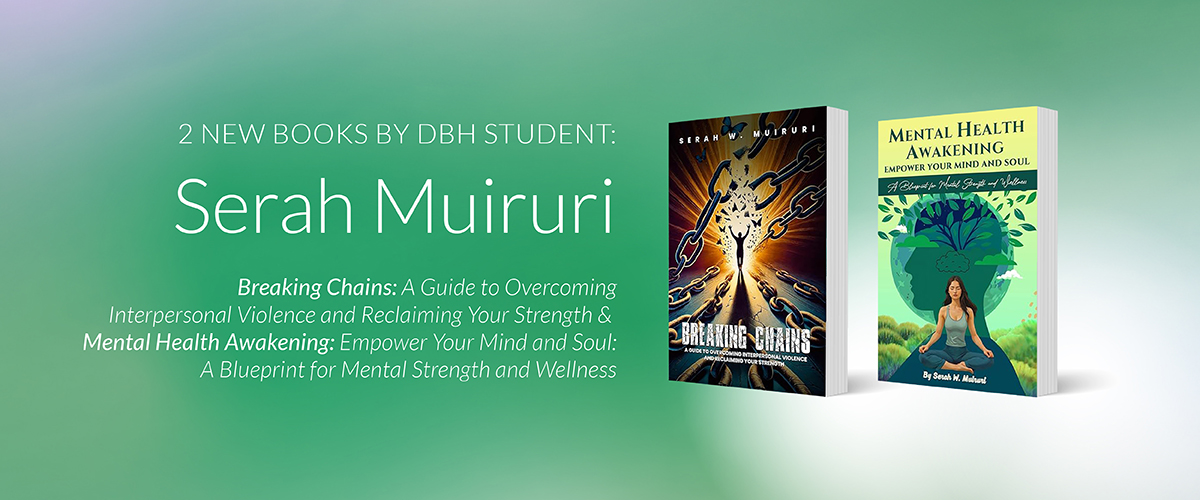
Doctor of Behavioral Health Student Serah Muiruri Launches 2 New Books
Cummings Graduate Institute for Behavioral Health Studies (CGI) is proud to celebrate Serah Muiruri, a Doctor of Behavioral Health (DBH) student, as she recently published 2 new books, Breaking Chains: A Guide to Overcoming Interpersonal Violence and Reclaiming Your Strength and Mental Health Awakening: Empower Your Mind and Soul: A Blueprint for Mental Strength and Wellness. Both books will be showcased at the upcoming International Book Fair in Frankfurt, Germany, taking place this October.
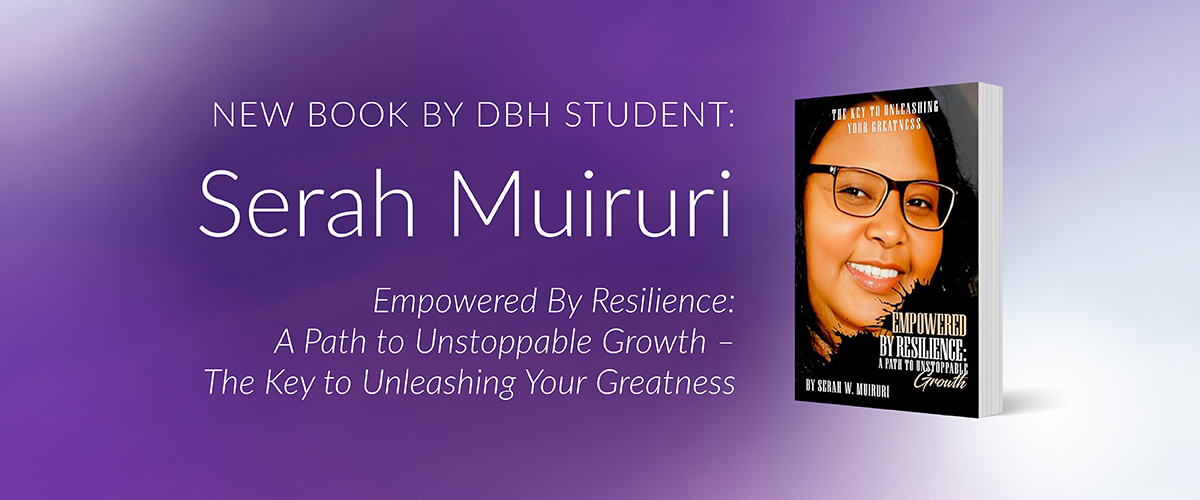
DBH Student, Serah Muiruri, Launches a New Book on Harnessing Resilience for Success
Cummings Graduate Institute for Behavioral Health Studies (CGI) is proud to celebrate Serah Muiruri, a Doctor of Behavioral Health (DBH) student, as she launches her new book, Empowered By Resilience: A Path to Unstoppable Growth – The Key to Unleashing Your Greatness.