 Building Better Systems for Youth: Dr. Erin Enwright on Improving Care Through Systems-Level Change
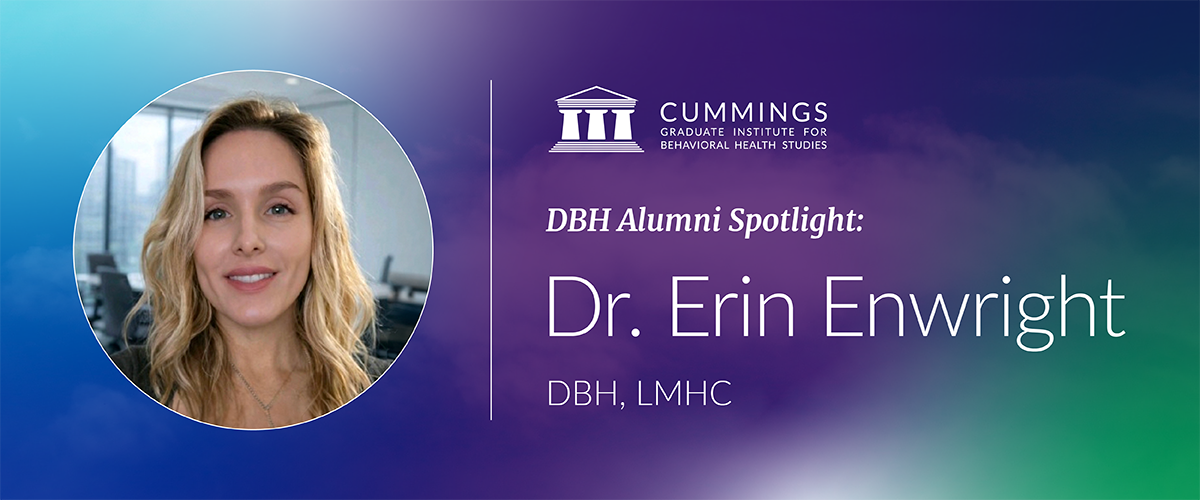
Dr. Erin Enwright, DBH, LMHC, is a Licensed Mental Health Counselor and Doctor of Behavioral Health whose career brings together clinical practice, behavioral health leadership, and systems-level improvement. With a background in psychology and clinical mental health counseling, Dr. Enwright currently works as a mental health assessment specialist serving youth in the justice system, where she uses evidence-based assessment and a whole-person approach to better understand each young person’s needs, strengths, experiences, and environment. Her work extends beyond direct care to developing programs, policies, and staff training designed to strengthen behavioral health services and create more compassionate, trauma-responsive systems of care. In this interview, Dr. Enwright shares how the DBH shaped her whole-person approach to behavioral health, her work to improve systems of care for youth, and her commitment to creating lasting change through compassion, advocacy, and leadership.
What does your work look like today, and what impact are you making?
Every young person has a story, and my job is to listen. As a mental health assessment specialist working with youth in the justice system, I bring a judgment-free, compassionate approach to understanding what led them here.
With my background as a licensed mental health counselor and doctor of behavioral health, I use evidence-based assessment tools alongside clinical insight to get a full picture of each youth’s needs. I look beyond the surface—exploring the social determinants of health like family dynamics, community environment, trauma history, and access to resources that shape their experiences.
My professional training and experience guide me in identifying not just risks, but strengths and opportunities for growth. From there, I help connect each young person to targeted programs and supports that are proven to make a difference—giving them a real chance to heal, build resilience, and move forward on a more positive path.
Because with the right support, their story doesn’t end here—it evolves.
What problem are you most passionate about solving?
My goal is to turn that understanding into meaningful action by helping connect youth with targeted, evidence-based programs and supports that address their individual needs. I hope this work can help interrupt cycles of trauma and justice-system involvement while giving young people the tools, resources, and support they need to heal and move forward.
I’m passionate about helping connect youth to the right supports at the right time—because early, meaningful intervention can change the trajectory of a life. Ultimately, I want to help break cycles of trauma and justice-system involvement and create pathways where young people have the opportunity to heal, build resilience, and thrive.
Looking back, how has the DBH influenced the path you’re on today?
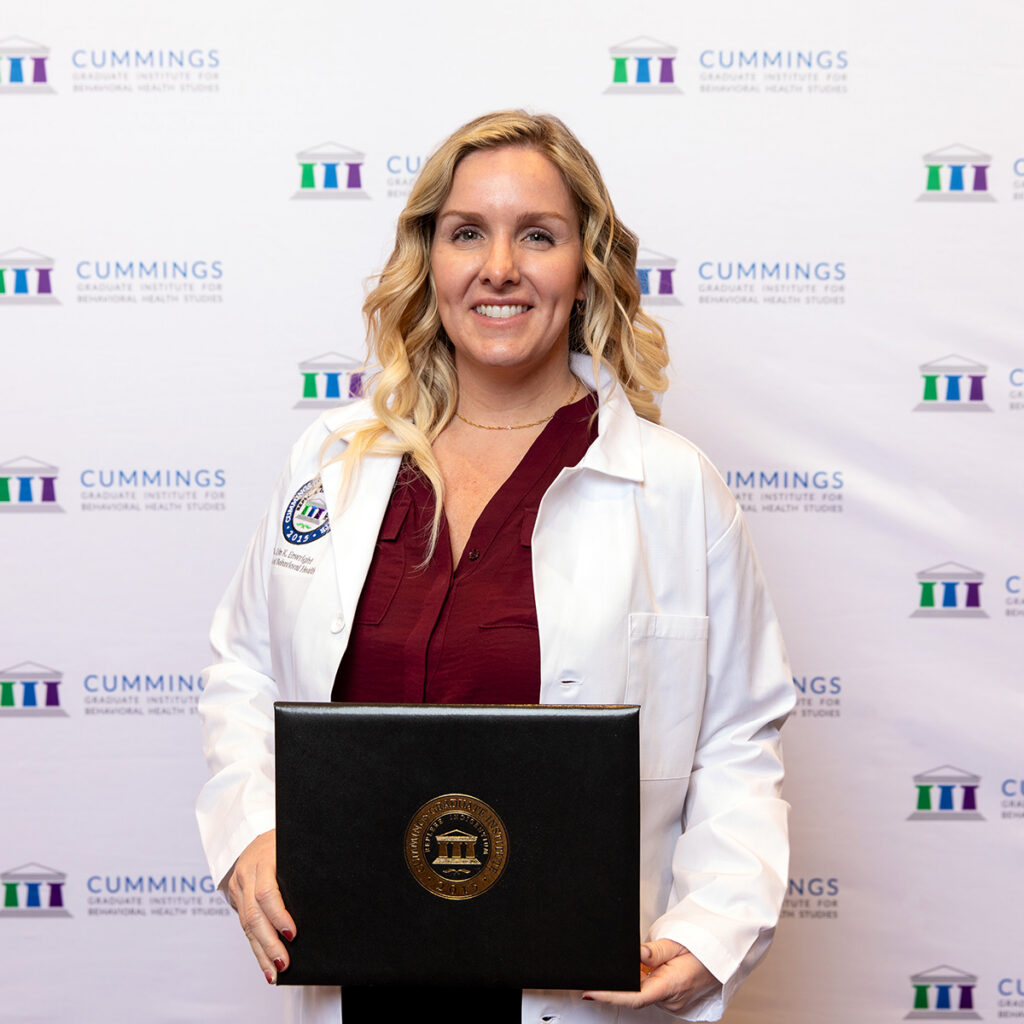
Earning my Doctor of Behavioral Health (DBH) fundamentally shaped the way I approach mental health care and the work I do today. The program helped me see behavioral health through a broader lens—one that goes beyond diagnosis or symptoms to consider the whole person and the systems that influence their well-being. That perspective has been especially meaningful in my work with youth in the justice system, where understanding a young person’s environment, trauma, family dynamics, and access to resources is often just as important as understanding their immediate mental health needs.
The program also strengthened my leadership by teaching me to think beyond individual cases and consider how we can improve systems of care. It challenged me to ask not only, “What does this young person need?” but also, “What can we change around them to create better opportunities for healing and success?”
Today, I carry that perspective into every assessment and interaction. The DBH has helped me become a more thoughtful clinician, a stronger advocate, and a more systems-oriented leader. Most importantly, it has reinforced my belief that effective mental health care should be compassionate, evidence-based, and responsive to the realities of people’s lives.
What accomplishment since earning your DBH are you most proud of?
One of the accomplishments I’m most proud of since earning my DBH is the opportunity to apply my knowledge and expertise to create meaningful change within my department by developing policies and procedures that promote a more informed, trauma-responsive, and behavioral health–centered approach to working with youth in the justice system. In addition, I’ve created and implemented training materials for direct care staff and frontline workers, equipping them with practical, evidence-based tools they can immediately apply in their daily interactions with young people.
What makes this work especially meaningful to me is the scale of its impact. Rather than supporting one youth at a time, I’m helping shape the systems and practices that influence every youth who comes through our care. By strengthening processes and building staff capacity, I’m contributing to more consistent, compassionate, and effective support across the entire organization.
My DBH gave me both the clinical foundation and the systems-level perspective to step beyond individual practice and contribute to meaningful organizational change. I’m proud that I’m helping translate behavioral health science into actionable policies.
What impact do you aim to have in your field and the communities you serve?
What’s next for me is continuing to grow as a behavioral health leader while creating meaningful, sustainable change for the youth and families I serve. My goal is to help create systems that look beyond a young person’s behavior and recognize the experiences, strengths, and potential that shape their future.
The legacy I hope to leave is one of compassion, advocacy, and lasting impact. I want my work to contribute to a culture where young people are seen for more than their circumstances and where the professionals supporting them have the knowledge and tools to make a difference. Ultimately, I hope to help create better pathways for healing, resilience, and opportunity—so that the young people I serve can move forward with the support and confidence to build a different future.
What part of the DBH experience has stayed with you the most?
The part of the DBH experience that has stayed with me the most is learning to look beyond the immediate concern and understand the whole person and the systems that influence their well-being. The Biodyne Model reinforced the importance of viewing behavioral health through an integrated, whole-person lens and recognizing that mental health is connected to physical health, environment, relationships, and the broader social determinants that shape a person’s life. It has also influenced the way I think about leadership and systems change. I’ve learned that meaningful behavioral health outcomes require more than individual intervention; they require collaboration, evidence-based practices, effective policies, and staff who are equipped to respond to the complex needs of the people they serve.
What advice would you give someone who feels called to create meaningful change in healthcare?
My advice to anyone who feels called to create meaningful change in mental health care is to stay curious, lead with compassion, and never underestimate the impact of truly listening. Meaningful change begins with understanding people beyond their diagnosis, behavior, or circumstances and recognizing the strengths and potential they bring to their own story.
Be willing to challenge traditional ways of thinking and look for opportunities to improve the systems around you. Your clinical knowledge is important, but so is your ability to advocate, collaborate, influence policy, and equip others with the tools they need to provide better care. Some of the most lasting changes happen when we move beyond treating individuals and begin improving the systems that support them.For future DBH students and healthcare professionals, I would also encourage you to embrace the whole-person perspective. The Biodyne Model taught me the value of looking at behavioral health within the broader context of physical health, relationships, environment, and social determinants of health. That perspective can transform the way we understand and serve the people in our care.
Most importantly, remember that change does not always happen all at once. Sometimes it starts with one conversation, one policy change, one training, or one person who feels seen and heard. Stay committed to the work, use your voice, and trust that the small changes you make today can create a lasting impact tomorrow.
Dr. Erin Enwright’s journey reflects how clinical expertise, compassion, and systems-level leadership can come together to create meaningful change in behavioral healthcare. The Doctor of Behavioral Health (DBH) program helped expand her perspective beyond individual clinical care, strengthening her ability to consider the broader systems, environments, and social factors that influence health and well-being. Today, she applies that perspective not only in her work directly with youth, but also through policies, training, and organizational practices designed to create more trauma-responsive and effective systems of care. As she continues to grow as a behavioral health leader, Dr. Enwright remains focused on creating lasting pathways for healing, resilience, and opportunity for the youth and families she serves.