 Rethinking Health, Healing, and Integrated Care: Dr. Michelle Francis on Leading Change
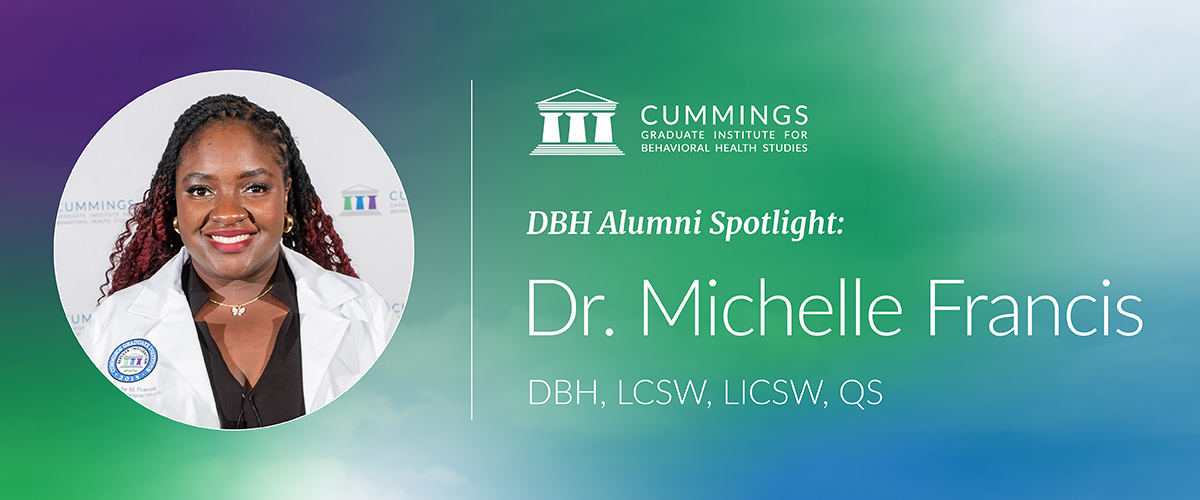
Dr. Michelle Francis, is a therapist, forensic social worker, entrepreneur, and Doctor of Behavioral Health dedicated to helping people navigate life’s challenges with authenticity, compassion, and evidence-informed care. As founder of Pinnacle Clinical Solutions, she has built a practice that blends meaningful therapeutic relationships with an integrated, whole-person approach to health and healing. Drawing on experience spanning child welfare, psychotherapy, substance use treatment, case management, and work with justice-involved populations, Dr. Francis understands that lasting change requires more than treating symptoms, it requires addressing the complex behavioral, physical, and social factors that shape well-being. In this interview, she shares how the Doctor of Behavioral Health (DBH) program reshaped her perspective on integrated care, strengthened her leadership as a systems thinker, and reinforced her commitment to expanding access to behavioral healthcare.
How has earning your DBH changed the way you view health, healing, and integrated care?
Earning my Doctor of Behavioral Health (DBH) has fundamentally changed how I view health, healing, and the systems designed to support individuals. Before this journey, I understood the importance of mental health and its impact on overall well-being. However, the DBH program deepened my understanding of how interconnected behavioral, physical, and social factors truly are and how often our healthcare systems fail when they address these areas in isolation.
The program challenged me to move beyond a traditional clinical lens and think more broadly about population health, care coordination, and system-level change. I began to recognize that many chronic health conditions are influenced by behavioral factors, while behavioral health concerns are often exacerbated by physical illness, socioeconomic barriers, and fragmented healthcare systems. Treating one without considering the other limits the potential for meaningful and lasting outcomes.
One of the most significant lessons from the DBH experience was learning the value of integration. True integrated care is not simply placing behavioral health professionals within medical settings; it is creating a culture of collaboration where providers work together to address the whole person. Healing occurs most effectively when physical health, emotional well-being, environmental influences, and social determinants of health are considered collectively.
Professionally, the DBH has expanded my role from clinician to systems thinker and advocate. I now approach challenges with a greater appreciation for interdisciplinary teamwork, healthcare innovation, and the importance of reducing barriers to care. Rather than focusing solely on individual treatment outcomes, I also consider how organizational policies, healthcare structures, and community resources influence a person’s ability to achieve wellness.
Behavioral health is evolving rapidly, what do you believe is the next frontier?
Share an innovative idea, framework, or approach that you believe could redefine how communities experience mental and physical wellness.
Where do you see Doctors of Behavioral Health (DBHs) making the greatest impact in the future of healthcare?
The next frontier of behavioral health is moving beyond treatment-centered care and creating truly integrated, proactive wellness ecosystems. Rather than waiting for individuals to enter care during moments of crisis, the future should focus on identifying behavioral, physical, and social needs earlier and responding through coordinated, whole-person interventions.
I envision a model that combines integrated behavioral healthcare, community partnerships, and population health strategies to create continuous support across settings, not just clinics and hospitals, but workplaces, schools, and community spaces. In this framework, behavioral health would become a standard component of preventative care, with screenings, behavioral interventions, and wellness planning embedded into routine healthcare experiences.
DBH professionals are uniquely positioned to lead this transformation because we operate at the intersection of clinical practice, healthcare operations, and systems thinking. DBHs bring the ability to translate behavioral science into practical, measurable change across organizations and communities. We can design integrated care models, improve collaboration across disciplines, influence policy, and advocate for equitable access to services.
Looking back, what moment or lesson from your DBH experience most transformed you?
Looking back on my DBH journey, the experience that transformed me most was my Population Health course. It was one of the most challenging experiences in the program and, honestly, one that put me through the wringer in the best way possible. The course pushed me beyond individual-level clinical thinking and required me to confront healthcare challenges through a systems and population lens.
For my project, I explored the relationship between chronic kidney disease (CKD) and mental health. Going into the research, I understood that behavioral health influences physical outcomes, but I was not fully prepared for what I would uncover. The findings were astonishing. I learned how many individuals living with CKD experience mental health concerns that impact treatment adherence, quality of life, disease progression, and overall outcomes. At the same time, many people at risk for these complications were not consistently engaging in preventative care or behavioral health support.
What challenged me most was not identifying the problem…it was being tasked with developing interventions that could create meaningful, life-changing, and sustainable outcomes for this population. It forced me to think differently. I had to move beyond short-term solutions and consider long-term behavior change, integrated care models, patient engagement strategies, community partnerships, and approaches that addressed both medical and behavioral barriers.
That experience reshaped how I think as both a clinician and a leader. It taught me that complex healthcare problems rarely have simple solutions and that lasting impact requires innovation, collaboration, and systems-level thinking.
Personally, the course strengthened my resilience and reminded me that growth often happens in discomfort. Professionally, it reinforced that my role is not only to support individuals in their healing but also to contribute to building healthcare systems that make wellness more attainable and sustainable for entire populations.
What is the change you most hope to see in healthcare during your lifetime, and how are you working to help lead it?
The change I most hope to see in my lifetime is a healthcare system where access to mental health services is no longer treated as a privilege, but as an essential and attainable part of overall healthcare. At the same time, I hope to see a system that values and compensates behavioral health professionals in a way that reflects their expertise, impact, and contribution to patient outcomes.
Throughout my career and DBH journey, I have seen how difficult it can be for individuals to access quality behavioral healthcare. Long waitlists, financial barriers, fragmented systems, and limited integration between physical and mental healthcare often prevent people from receiving support until concerns become more severe. Access should not depend on income, geography, or navigating complicated systems.
My DBH training strengthened my understanding that improving access requires more than increasing services, it requires redesigning systems. The program challenged me to think beyond direct clinical care and consider policy, population health, organizational leadership, and integrated care models that improve both patient outcomes and provider sustainability.
As I prepare to lead this change, I aim to continue building spaces that expand access while maintaining high-quality, evidence-informed care. I want to advocate for stronger collaboration between behavioral and physical healthcare, develop sustainable service models, and contribute to initiatives that reduce barriers to treatment.
Ultimately, I believe meaningful change happens when we stop viewing mental healthcare as separate from healthcare altogether. My goal is to help create systems where people can receive the care they need earlier, more easily, and without sacrificing the value of the professionals providing that care.
How do you define leadership in behavioral health, and how has the DBH prepared you to lead with courage, empathy, and evidence?
I define leadership in behavioral health as the ability to create meaningful change while remaining grounded in empathy, accountability, and evidence-informed decision making. Leadership is not simply directing others, it is being willing to challenge outdated approaches, adapt to evolving needs, and make decisions that support both people and sustainable systems of care.
One of the experiences that shaped my leadership philosophy most has been building and operating my private practice. As a solo practice owner, I wear every hat: clinician, administrator, strategist, problem solver, and business leader. Simultaneously being both an employee and employer has given me a unique perspective on leadership. I am responsible for delivering quality care while also ensuring that operations, growth, and long-term sustainability remain intact.
This experience taught me that leadership often happens behind the scenes through consistency, difficult decisions, and balancing competing priorities. It has strengthened my ability to think critically, remain flexible, and lead even without a large team around me.
My DBH training reinforced these skills by expanding how I approach healthcare challenges through systems thinking, integrated care, and population-level impact. It prepared me to lead with courage by questioning existing models, with empathy by keeping people at the center of decisions, and with evidence by ensuring innovation is supported by meaningful outcomes.
Every DBH student begins with a “why.” What would you say to someone just beginning to discover theirs?
To future DBH students, my biggest piece of advice is this: never forget your why.There will be moments throughout the journey that challenge you academically, professionally, and personally. You may question your capacity, shift your goals, or discover new passions along the way and that is okay. Growth often changes your perspective. However, at the core of your journey should remain the reason you chose this degree and this profession in the first place.
Your priorities may evolve as you gain new experiences and develop new skills, but your “why” becomes the anchor that keeps you grounded when the work feels difficult or overwhelming. Whether your purpose is expanding access to care, improving systems, advocating for communities, advancing integrated healthcare, or creating meaningful change, hold onto it.
The DBH journey will challenge how you think. It will push you beyond clinical work into leadership, innovation, and systems-level impact. Allow yourself to stay open to that transformation. Remember that the degree is not the destination, it is a tool. The real work begins in how you apply what you learn to improve the lives of individuals, communities, and the future of healthcare.
Stay connected to your purpose. It will carry you further than any title ever will.
Dr. Michelle Francis exemplifies how Doctors of Behavioral Health are helping shape the future of healthcare. By combining clinical expertise with systems thinking, leadership, and a commitment to whole-person care, she continues to expand access to behavioral health services and advance more integrated, equitable healthcare systems. Her perspective demonstrates how DBHs are leading meaningful change, improving care for individuals while transforming the systems that support healthier communities.
Connect with Dr. Michelle Francis
How the DBH Program Prepared Dr. Michelle Francis to Lead Healthcare Transformation
Dr. Michelle Francis Published in Integrated Behavioral Health: Applying the Biodyne Model in Healthcare
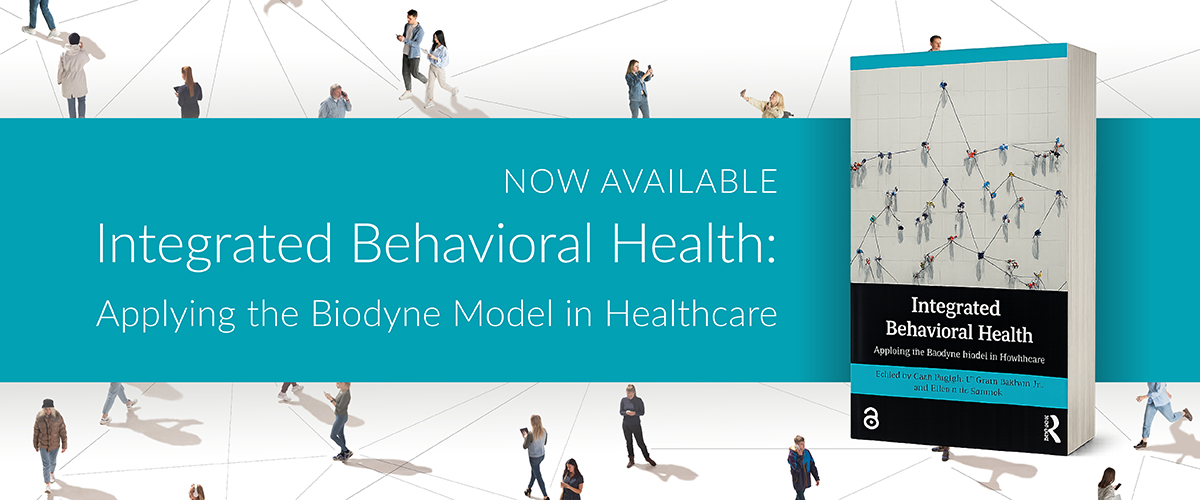
Integrated Behavioral Health: Applying the Biodyne Model in Healthcare explores the evolving role of integrated behavioral healthcare in modern healthcare systems and presents practical, systems-oriented approaches for improving patient outcomes, collaboration, and whole-person care.
Edited by CGI academic leadership and contributors from the Doctor of Behavioral Health (DBH) community, the book brings together interdisciplinary perspectives on the challenges and opportunities shaping healthcare today. Through the lens of the Biodyne Model, readers are invited to examine how behavioral health, medical care, leadership, policy, and human systems intersect in real-world practice.
Explore Dr. Michelle Francis’s Reseach: PHM: Chronic Kidney Disease and Depression

Imagine the mental agony of having to wait on edge for months or more commonly, years, on the kidney transplant list for a match to receive a new kidney. This is the reality for more than 100,000 Americans. According to the National Kidney Foundation (2023), the average wait time to receive a new kidney is about 3-5 years, and the wait may be longer based on one’s location in the country. Given these statistics, it is evident as to why an individual with Chronic kidney disease (CKD) may also suffer from depression. This literature review will explore the relationship between CKD, depression, and treatment modalities that serve as the best outcomes.
Check Out Dr, Michelle Francis on the Disruptors at Work Podcast
In this episode of Disruptors at Work: an Integrated Care Podcast, host Dr. U. Grant Baldwin, Jr., DBH, Director of the Doctor of Behavioral Health (DBH) program at Cummings Graduate Institute for Behavioral Health Studies, explores the complexities of addiction, examining both substance and behavioral addictions and their impact on the brain, with guest, Michelle Francis, LCSW/LICSW-QS. Our special guest discusses the causes, diagnosis, and treatment approaches, highlighting the importance of understanding the neurobiological mechanisms. The episode also highlights the importance of community support, prevention strategies, and integrated approaches for managing co-occurring disorders to improve recovery outcomes.
Looking Back: Dr. Michelle Francis’s DBH Student Profile
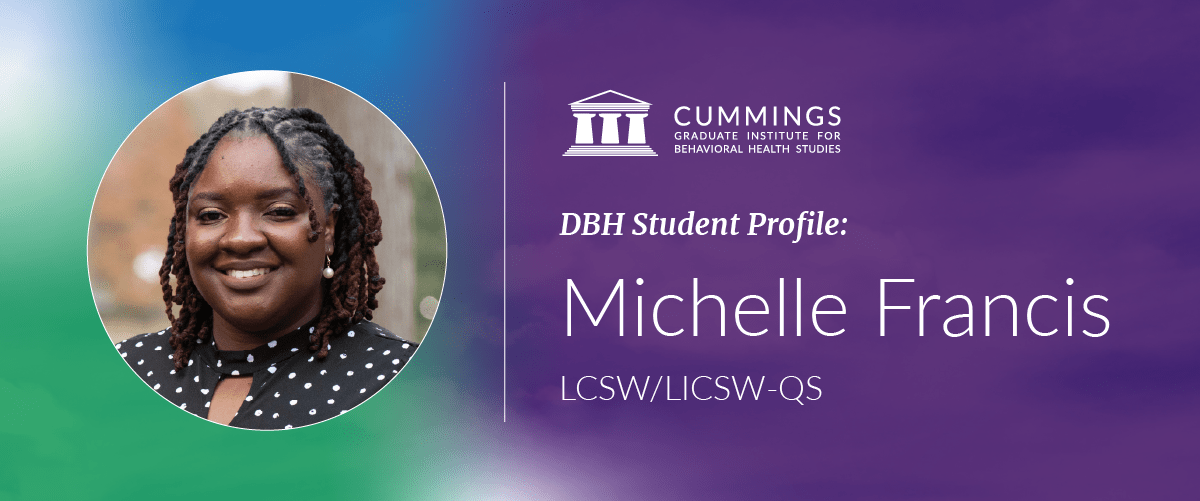
Born in Jamaica and raised in South Florida, Michelle Francis always knew her path would lead to a career focused on helping others. After earning a bachelor’s degree in Criminal Justice and a master’s in Social Work from Florida Atlantic University, her passion for serving others blossomed. Over the course of her career, she has worked across various sectors of behavioral health, including working with incarcerated offenders, child welfare, case management, and assisting those struggling with substance use disorders—an area she is deeply passionate about. As a Qualified Supervisor for social work interns in Florida, she helps guide the next generation of clinicians toward licensure. Now as a DBH candidate and Licensed Clinical Social Worker, Michelle has launched her own venture, Pinnacle Clinical Solutions (PCS), a counseling and consulting practice dedicated to providing exceptional therapeutic services and training to individuals and agencies alike. Michelle is passionate about decreasing the stigma surrounding substance use disorders and other addictive behaviors and advocating for underserved communities to access the care they need. In this interview, she shares insights into her DBH program experience, her perspective on holistic care, and her vision for the future of behavioral healthcare.