
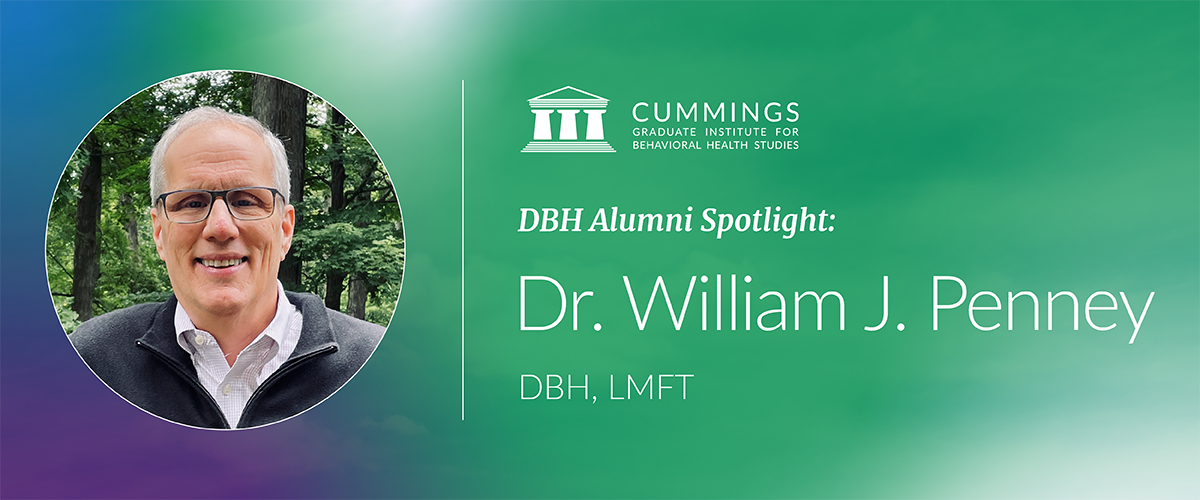
 Advancing Integrated Care in the Workplace: Dr. William J. Penney on Expanding Access Through Employee Assistance Programs
Dr. William J. Penney holds a Doctor of Behavioral Health from Cummings Graduate Institute for Behavioral Health Studies and a master’s degree from New York University. He serves as Clinical Director of Counseling Care Associates, where he provides counseling to individuals, families, and couples while overseeing clinical staff to ensure high-quality mental health care. Through Dr. Penney’s leadership, the practice delivers Employee Assistance Programs across diverse settings, including schools, government agencies, and public institutions, integrating behavioral health support directly into the workplace. His doctoral work focused on fathers’ experiences following the birth of premature infants requiring Neonatal Intensive Care Unit (NICU) hospitalization, exploring key emotional and relational challenges during this critical period. In this interview, Dr. Penney shares insights on applying integrated care in workplace settings, the lasting impact of the DBH on clinical practice, and the importance of understanding the connection between physical and mental health in delivering effective care.
In what ways has your DBH experience influenced your professional practice and leadership?
Currently, I serve as the clinical director of a small mental health practice in northern New Jersey. Counseling Care Associates specializes in individual, marital and group psychotherapy. However, one of the most interesting aspects of our practice is our focus on the provision of Employee Assistance services. Counseling Care operates five employee assistance programs: the agencies where we provide these services are quite varied. At this time, we operate programs with two large urban school systems, a police department, a large governmental agency and a multi-site public library system. Employee Assistance Programs provide mental health, addiction and managerial services to both employees and administrators of these agencies. The work of the Employee Assistance Program is challenging in that there are a wide range of interventions that are provided to both individuals and groups who work at these agencies.
The Doctor of Behavioral Health Program at CGI played an important role for me in improving the quality of care for these programs. The doctoral program at CGI focuses on integrated care; generally with a focus on services in health care settings. I have been able to utilize these principles and techniques and apply them directly to the workplace. This has resulted in improved coordination of care that workers receive and improved communication among workers, administrators and health care providers.
 Looking back, what part of your DBH experience stands out the most to you now?
During the time I attended CGI, the doctoral program was small and many of the classes I took were attended by the same group of students. This created a close knit group and I benefited from the continued interaction with these students during my three and a half years at CGI. This type of program structure was something I really was looking for and made the process so much easier and more supportive.
How has your DBH experience informed your perspective on behavioral health and healthcare systems?
As stated above, theories and practices of integrated health care benefit providers in a myriad of settings. My particular interest is with applications of integrated health care in the work place and I urge interested students to explore providing services in work place related settings.
What key skill, concept, or insight from the DBH do you apply regularly in your professional practice?
The biggest take away for me was understanding the interaction that physical health problems have on mental health. Additionally, the courses I took in psycho-pharmacology, neuropathophysiology and pathophysiology expanded my understanding of key medical issues that impact an individual’s mental health.
What impact do you aim to have in your field and the communities you serve?
At this stage in my life, within the next ten years, I will have to accept that I will need to retire from the field. This is not a pleasant thought for me. I enjoy working and I truly do not want to stop practicing. Recently, I have been able to contract with a new agency for the provision of Employee Assistance services. If I were a younger man- I would love to create a center for total employee health care including, physical, mental health, addiction and family services. Unfortunately I believe that I am a bit too close to retirement age to begin such an undertaking – but the idea is very captivating for me. Who knows, perhaps I will give it a try in the near future!
What advice would you give to prospective students or professionals considering the DBH program?
If you put in the effort and learn from the instructional staff and students at CGI, your experience will be life changing, It certainly was for me.
Dr. William J. Penney’s work reflects the real-world impact of the Doctor of Behavioral Health program equipping him with the tools to integrate behavioral health more effectively into workplace systems. Through the application of integrated care principles, he has strengthened the delivery of behavioral health services within workplace settings, improving coordination, communication, and overall quality of care. His continued contributions demonstrate how the DBH equips professionals to expand their influence beyond traditional clinical roles and drive meaningful change in the systems where care is delivered.