 Care Without Silos: Maribel Jiménez-Martoral on Connecting Behavioral Health, Recovery, and Whole-Person Care
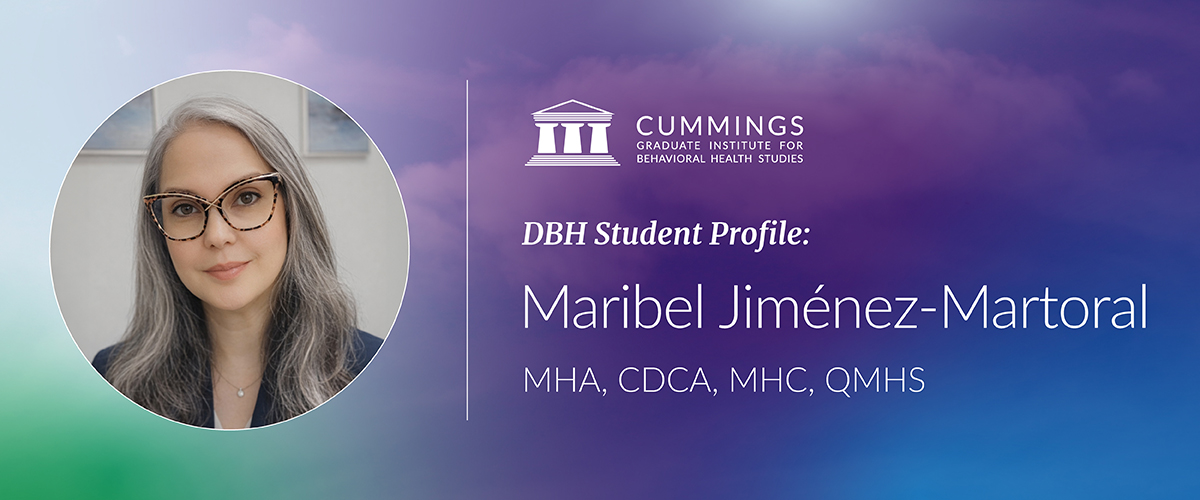
Maribel Jiménez-Martoral is a behavioral health professional with more than 30 years of experience across healthcare and public and private sector settings. Originally from Puerto Rico, she has called Ohio home for nearly three decades and brings a service-oriented approach grounded in collaboration, continued learning, and whole-person health. Her professional interests include substance use disorders, mental health integration, trauma-informed care, and improving care for underserved and highly stigmatized populations. As a Doctor of Behavioral Health (DBH) student at Cummings Graduate Institute for Behavioral Health Studies, Maribel is building on her extensive professional experience to strengthen her knowledge, leadership skills, and ability to approach care through an integrated lens. She credits the DBH program with helping her find her professional voice, build confidence, and apply evidence-based knowledge directly to her work. In this interview, Maribel shares how the DBH program has shaped her approach to integrated care, strengthened her professional confidence, and deepened her commitment to whole-person care for underserved populations.
How has the DBH program influenced your approach to behavioral health?
I began my career working in healthcare over 30 years ago. While providing care, I have always been curious about behavioral health. What makes people behave the way they do? Why do they react to certain things or situations the way that they do? When it comes to someone’s health and well-being, I have always wanted to know more. After working in different areas in different local hospitals, in 2023, I found myself working with a population that was extremely stigmatized. I became a CDCA (Chemical Dependency Counselor) and started working with people who use substances and/ or alcohol. This renewed my desire to help people with behavioral health issues from a non-judgmental, knowledgeable, and holistic standpoint.
When I started my position as a mental health coach in 2025 and began my coursework for my DBH through CGI, I quickly realized I was not only walking into the workplace with more knowledge. But I was walking in with confidence. The information that I am learning through the DBH program is something that I have been able to apply to my work right away. It has allowed me to connect with residents better, understand their behavioral health needs, and be a valuable part of their care planning.
The DBH program has allowed me to find my professional voice. I have found myself becoming more confident, more outspoken, and wanting to step into my seat at the table. I now lead presentations at work and in the community. I readily participate in outreach/tabling events and public speaking engagements. Why? Because I have the education behind what I am saying. I have become confident in my ability to not only share what I know but to back it up by explaining the evidence-based practice that supports it.
But what has surprised me even more than my own growth is the level of support that CGI shows its students. From professors and ancillary staff being readily available to a timely and thoughtful response to students’ questions and concerns. You always feel like you are heard and supported. This level of support has allowed me to not only grow as a student but also in my professional career. Sometimes it takes someone else believing in you and making you feel comfortable to walk into that room with your head held high at work.
Of course, I know that experience is something that you can’t teach someone. There will always be places that care about credentials. But please allow me to obtain my DBH and come back out into the world with not only a title but also the knowledge, skill, and ethical training to care for people with dignity and respect. Training that will allow me to care for the whole person in a holistic setting.
The DBH program at CGI has given me the tools to really make a difference. Not only do I have 30+ years of experience, but now I have the ability to provide that care from an educated standpoint. I would talk to anyone about joining CGI to pursue their DBH degree, no doubt!
What are your future career goals, and how do you envision the DBH program contributing to your success?
My main professional interests regarding behavioral health are substance use disorders, mental health integration, and whole person care. I enjoy learning how different factors impact people’s ability to engage in care, adhere to treatment plans, and recovery. I am particularly interested in caring for underserved and highly stigmatized populations. In addition, academic topics that top my interest include integrated care, evidence-based interventions, trauma-informed care, motivational interviewing, and anything that will allow me to provide care to the whole person.
As a professional, my career objective is to become a more effective leader, contributor, and educator in my field. By pursuing a DBH, I will be able to build on my past experiences while gaining the clinical knowledge and leadership skills necessary to be a well-rounded provider. I hope to one day help develop integrated, holistic care models that treat residents as a whole person rather than a series of diagnoses or programs they belong to.
Can you share an experience that shaped your understanding of integrated behavioral healthcare?
Something that really impacted me during my DBH journey was when I first started to understand the true meaning of integrated care. I was really able to understand that it is part of our responsibility to provide integrated care. I had been working with a resident who constantly missed medical appointments. She also had symptoms of mental health and substance use that were complicating her overall medical conditions. Before my DBH education, we may have just addressed each of these topics separately and handed her off to another provider. But as I started to think about this person through an integrated lens, I saw how her behavioral health played a role in her physical health and social determinants.
As soon as I shifted my mindset about this resident’s situation, I was able to approach her about it. We discussed things that were getting in the way of her attending appointments. I also connected with other providers to improve communication between systems. After this little intervention, my resident began attending more appointments and was more involved in her care. This was one of the moments that made me realize that integrated care is so much more than just collocating services. It’s about changing the way we think, communicate, and care for others. My experience at CGI has empowered me to do just that.
What fuels your passion for advancing integrated behavioral health, and how do you stay motivated?
When I think about what initially motivated me to pursue advancing care integration, it goes back to my career of over 30 years in health care. Throughout my career, I have always felt passionate about caring for individuals who fall through the cracks, are misunderstood, or are siloed by the system meant to care for them. I have spent a lot of time caring for people with addiction and mental health disorders, as well as providing care to people who have complex psychosocial needs. My career choice was based on my desire to provide better care coordination for patients and families so they would not feel as frustrated as I did throughout my journey. I always wondered why someone couldn’t get services coordinated to better meet their needs or to see the patient as a whole person.
As I began working with a population in 2023 that is highly stigmatized when seeking care, my passion grew even stronger. I have been given the opportunity not only to learn from these individuals but also to connect with them on a personal level. Many have shared their stories with me about not being able to get or stay engaged in care. Hearing these stories solidified my belief that integrated care shouldn’t be a choice. When we can better coordinate physical health, behavioral health, and social needs, we can do more to keep people housed and engaged in care.
My journey has also been fueled by my time as a mental health coach and learning from faculty throughout my studies in the DBH program. Learning about how to integrate care from both a theoretical perspective and hands-on practice has allowed me to understand how we can make systems better for people in recovery. It has also helped me recognize my responsibility to be part of the solution. Using an evidence-based and holistic approach to coaching residents has allowed me to see how theory can be applied to real world practice.
What inspires me to continue on my journey is the residents I work with. Every day, I am reminded that change doesn’t happen overnight. Simple steps like attending appointments, engaging in services, or asking for help can be small victories that can deliver big changes. I am inspired when I get to share my story with someone, and they trust me enough to share theirs or let me walk them through their darkest moments.
My classmates and professors at CGI have also been a huge inspiration to me. The support I have received, the accessibility of faculty, and the applied aspect of our program have allowed me to feel inspired. I know that I am in the right place and that has allowed me to gain confidence in my abilities and future.
I want to continue to be a part of making a change in how people receive behavioral health services. Whether that is on an individual level or system level change, I hope to inspire others to treat people with dignity and see them as a whole person.
What advice would you give to prospective students or professionals considering the DBH program?
If I could send a message to my fellow DBH students or professionals considering the DBH program, I would want to remind them that when walking into the program, you should have an idea that you will not only be thinking about patient care differently, but you will be thinking about how systems operate on a different level.
First, come in with an open mind to thinking about care beyond the clinical scope. You are learning to provide integrated care. While your role may include providing therapy, you will also learn about how behavioral health operates inside a medical home, in community settings, working with policies and actual medical providers as part of a team. When entering the program, try to learn everything you can about workflow, population health, and how to practice with outcomes in mind.
Second, get comfortable with being uncomfortable. Providing care in an integrated setting is typically not black and white. Often, you will be juggling many different priorities that your patients, organization, and system may require of you. Learn how to adapt, use your clinical reasoning, and communicate across multiple disciplines.
Third, take advantage of being around so many fantastic classmates from different professions. You learn how to communicate about patients in real time with some of your classmates who will be your colleagues in an integrated setting. Whether that is speaking with a medical provider about a shared patient, explaining your documentation to a case manager, or interacting with administration, you will gain skills by working with your classmates.
Last, remember your why. The DBH program can be a lot. As professionals, many of us will be juggling work, academics, and required field placement hours. Remind yourself why you are pursuing a DBH and let that be what pushes you through when things get overwhelming. Whether it’s improving access to care, advancing equity for all populations, or simply wanting to be the best clinician you can be. Think of the DBH as a way to evolve not just your skills, but your professional identity. Those who will excel in the program are those who can shift their lens from one professional to a collaborative, integrative care team member.
Throughout her DBH journey, Maribel Jiménez-Martoral has seen the program influence not only how she approaches behavioral health, but also how she sees herself as a professional. By applying what she is learning directly to her work, she has strengthened her confidence, expanded her leadership voice, and developed a more integrated approach to addressing physical, behavioral, and social needs. As she continues toward earning her Doctor of Behavioral Health degree, Maribel hopes to use her experience and education to advance whole-person care, improve services for underserved populations, and help create systems that treat people with dignity and respect.