 How Dr. Ellen Fink-Samnick Built a Legacy Through Writing
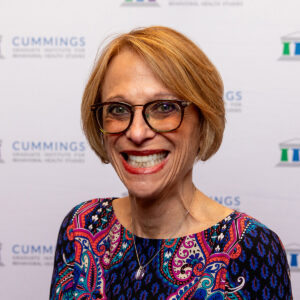 Long before DBH Almnua, Faculty Associate, and Academic Advisor, Dr. Ellen Fink-Samnick became a multi-book author and one of the most recognizable voices in professional case management, writing was simply a way to make sense of the world around her. It wasn’t about building a platform or establishing authority. It was about clarity, reflection, and a voice that often felt easier to express on paper than out loud.
“I was always a strong writer growing up. For those who know me, they may be surprised to hear that I often felt more comfortable expressing my perspectives through writing than speaking.”
That instinct followed her into leadership roles, where writing became both a professional tool and a form of advocacy. As her responsibilities expanded, so did the depth of her work. She began drafting proposals, reports, and strategic briefs for executive teams, while quietly crafting articles that helped colleagues navigate the knowledge, skills, and ethical expectations of a rapidly evolving healthcare landscape. Over time, those early pieces transformed into something more bold and more visible.
“As my professional lens grew beyond the scope of a single employer, health system, and organization, my editorials and anecdotal articles transitioned to lengthier and bolder pieces. They also began to intersect with professional standards of practice, codes of ethics, and industry regulatory guidance.”
Becoming an Ethical Voice in the Field
What began as internal writing gradually moved into public spaces, newsletters, journals, and professional publications that allowed her to address topics many avoided. Ethics, health equity, workplace culture, and trauma became recurring themes. With each article, her voice sharpened and her readership grew, eventually earning her a reputation she never set out to claim.
“My writing grew bolder, and my popularity grew. The works hit critical themes of interest spanning ethics, workplace bullying, health equity, and other themes. I became known as the industry’s ‘ethical compass’ and have become one of those ‘thought-leaders’ for the professional case management workforce.”
From Articles to Books
The transition from articles to books happened almost accidentally. After collaborating on a series of competency-based articles with a colleague, an editor jokingly suggested they take the next step. What followed felt less like a strategic decision and more like a moment that unfolded naturally.
“Upon writing the third article of the series, our editor joked, ‘When are you writing the book?’ The next thing my colleague and I knew, we were on a train to Philadelphia, PA, to meet with a book editor at Wolters Kluwer, and we signed our first book contract that afternoon.”
That first publication, COLLABORATE for Professional Case Management, released in 2016, marked the beginning of a writing career that would expand into six books and countless articles that continue to shape professional standards.
Writing to Meet the Moment in Behavioral Health
Her most recent work, Behavioral Health for Case Management, represents what she describes as her boldest project yet, a comprehensive resource designed to meet the needs of a diverse healthcare workforce navigating the growing integration of behavioral health into every clinical setting.
“Behavioral Health for Case Management is my boldest and largest book. It also has broad appeal for its written nature as an authoritative text for academia, accreditation/credentialing exam study guide, as well as a readily available professional onboarding tool. That’s a massive audience to cover!”
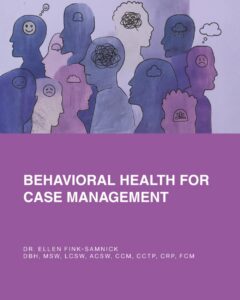 The book reflects years of conversations with colleagues who asked her to translate complex behavioral health concepts into practical guidance they could use in everyday practice.
“For years, my nursing and non-behavioral health colleagues asked me to ‘share my brain’ and craft content to guide their successful engagement, interviewing, and understanding of the minutiae of mental health.”
Her Doctor of Behavioral Health training deeply shaped the framework of the text, grounding it in whole-person care and integrated systems thinking. Rather than focusing solely on clinical symptoms, the writing examines how behavioral health conditions intersect with trauma, social determinants, and life-stage development across diverse populations.
“This book got the full benefit of my integrated care lens… Our expansive focus is front and center, in viewing how behavioral health conditions appear across the developmental life stages and society’s most vulnerable populations.”
The Personal Side of the Writing Process
Behind the polished chapters and structured frameworks, however, writing remains an intensely personal process. Balancing authorship with professional responsibilities brings both fulfillment and challenge, particularly when the subject matter touches on deeply emotional terrain.
“It can become tough for me to know when I’m tired, or my brain is beyond contemplating the right way to phrase or frame a concept… The Behavioral health book has a lengthy chapter on Suicidality. It was an intense and emotional ride to craft the content and right messaging, especially as a suicide loss survivor.”
When the work becomes heavy, she has learned to step back, not as a sign of weakness, but as an essential part of sustaining creative energy.
“I’ve learned to give myself permission to walk away from the product. It may be for an hour, a day, or more.”
Advice for Aspiring Authors
Today, her writing continues to evolve alongside her professional identity, serving as both a reflection of her values and a contribution to the future of healthcare. For students and alumni considering authorship, her advice is grounded in authenticity rather than perfection.
“Write to your passion and interests. Start with blogs and more informal publications to learn your voice and hone your approach… Don’t be afraid to take some risks as you write.”
She also offers a reminder that resonates far beyond publishing.
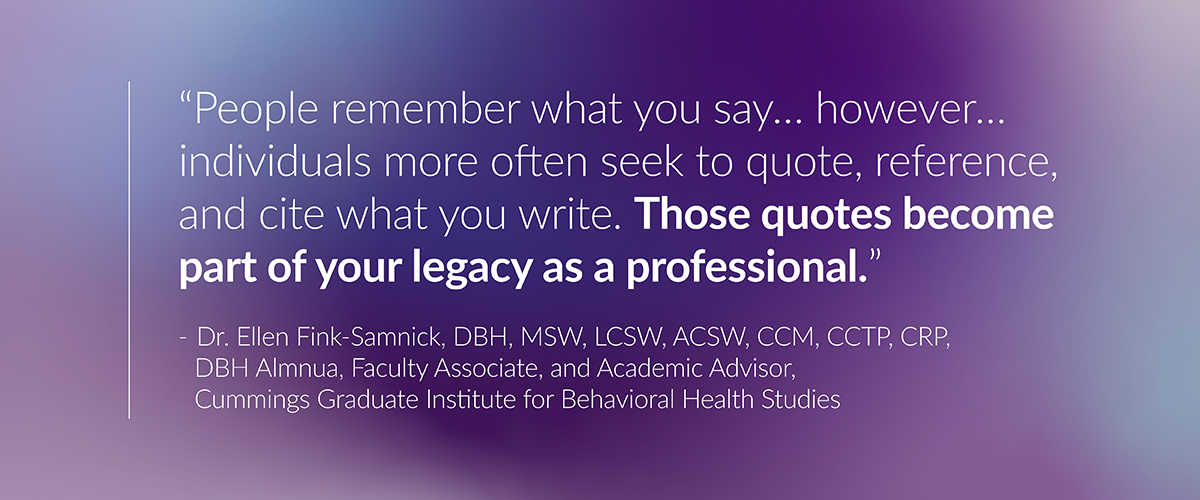
“People remember what you say… however… individuals more often seek to quote, reference, and cite what you write. Those quotes become part of your legacy as a professional.”