The part of the job no one trains for
On any given day, a firefighter may move from one emergency to the next without pause. The work demands immediacy. There is no time to process, only to respond.
The impact following each call is less visible. It doesn’t make it into incident reports or public narratives. Images, sounds, decisions, and losses accumulate quietly in the nervous system over time in ways that, for many first responders, have been considered just part of the job. ‘Suck it up’ is a response that has been deeply embedded in an occupational culture in which personal weakness is viewed as a professional hazard. The term ‘trauma’ is used medically to refer to the lives they are trying to save. For first responders, thinking about their own trauma exposure and learning how to cope effectively to protect their own health and mental health is not a standard part of the training.
For those who routinely save strangers’ lives, a silent crisis has been raging. Rates of fire fighters who die by suicide are estimated at more than twice the number of those who die in the line of duty (Ruderman Family Foundation, 2018). These professionals face significantly higher rates of posttraumatic stress disorder, depression, hazardous alcohol use, and suicide risk. Cumulative trauma exposure, entrenched cultural stigma, and lacking mental health assessment or treatment options for first responders contribute to an unbelievable tenfold higher risk of suicide for emergency medical services (EMS) professionals compared to civilians (Moslehi et al., 2025).
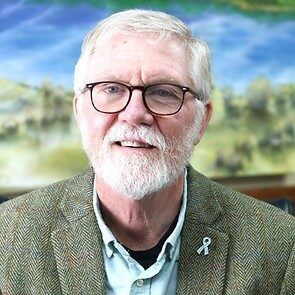 But a shift is beginning to take shape in New Mexico through trauma informed training for firefighters and EMS personnel. Out of initial conversations between CGI alumnus Dr. Jackson Williams, DBH, LPCC and Chief (Ret) Paul Bearce while Dr. Williams was a counseling intern, a more strategic approach to first responder mental health began to emerge. When Rio Rancho Fire and Rescue Department (RRFRD) tragically lost one of their own by suicide in 2019, Chief Bearce and Dr. Williams were able to secure grant funding to develop and deliver the statewide training “The Fire That Burns Within,” also in partnership with Laura Nguyen and Mary VanHaute. The goal of the training is not simply to raise awareness around the impacts of trauma, but to build something more durable; an approach that treats behavioral health as essential to the work, not separate from it.
The training reframes trauma as an occupational exposure, something inherent to the profession itself. That distinction matters. It allows firefighters, paramedics, and emergency responders to begin recognizing their reactions not as personal shortcomings, but as predictable responses to repeated stress and trauma. More importantly, the program challenges “suck it up” culture and presents a “stop the stigma” approach in which new recruits as well as seasoned first responders learn that, when unaddressed, trauma manifests in ways that can end careers, marriages, and lives.
Inspired by the grassroots efforts led by Dr. Williams and Chief (Ret) Bearce, filmmaker, executive producer, and cinematographer Charles English proposed to highlight their story in a documentary film titled “The Call.” The film, co-created by director, producer, and editor Laura Boyd Owen, follows firefighters as they navigate the demands of their work, the lived experience of posttraumatic stress among these professionals, the shifting culture, and the emerging systems of support that are beginning to take hold. It captures the sense of urgency of these rescuers to prevent trauma accumulation, to help others identify the signs of posttraumatic stress early, and to do something about it.
The Call highlights how CGI alumni like Dr. Jackson Williams represent a growing field of professionals trained to operate at the intersection of clinical care and real-world systems. Their role is not confined to traditional treatment settings or clinical care, but extends into public health and health policy advocacy as well as workforce development, education, and training from an integrated and whole-person approach.
 Appearing alongside Dr. Williams in the film is Heather Rist, LPC, LMHC, a Doctor of Behavioral Health candidate at CGI and subject matter expert in trauma and mental health care for first responders. Her presence in this effort signals something equally important, that this work is being carried forward, refined, and expanded by the next generation of behavioral health professionals who are being trained with these realities in mind.
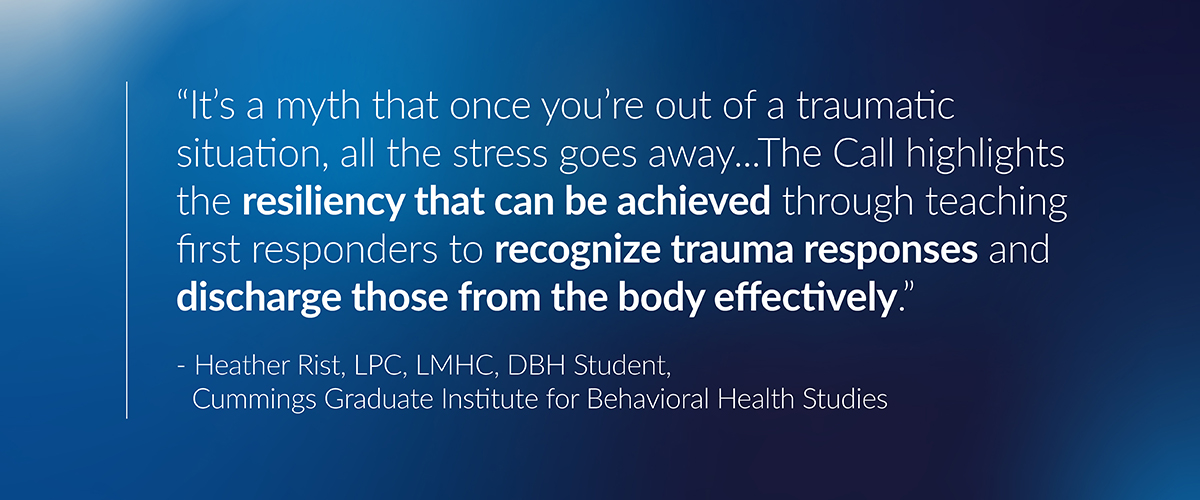
“It’s a myth that once you’re out of a traumatic situation, all the stress goes away. Stress and trauma injuries are stored in our autonomic nervous system; i.e., in the body. It’s an automatic response that you can’t think your way out of, because it lives in the body. The Call highlights the resiliency that can be achieved through teaching first responders to recognize trauma responses and discharge those from the body effectively.” – Heather Rist, LPC, LMHC, DBH
The Call film premieres June 20, 2026 at the South Valley Community Center in Albuquerque, New Mexico. The event, presented in partnership with The Sodality Foundation, is designed not only as a screening, but as a space for dialogue. Following the film, a panel discussion will bring together voices from the fire service and behavioral health communities, including CGI alumni and student contributors, to explore the real-world implications of what the film portrays.
It is an opportunity to connect story with practice, to move from awareness into action.
There is no single intervention that resolves the occupational hazard of repeated trauma exposure faced by first responders. The work is ongoing, shaped by each department, each individual, and each moment when someone chooses to speak instead of staying silent.
What began as a pilot partnership has grown into something more expansive, a model for integrated behavioral health training and services for emergency medical service professionals in ways that are practical, sustainable, and life saving.
The Call film brings visibility to that ongoing work, happening now – outside the frame, in training rooms, in firehouses, and in conversations that, not long ago, may not have happened at all.
“The Call started as a film focusing on one group of individuals hoping to change the discussion around first responder mental health and trauma. It became a story about the community itself working together to accomplish this goal. The Call brings me a lot of hope about how the culture can change when we look at things through an integrated lens.” – Charles English, Executive Producer, The Call
The Call Film Premiere
June 20, 2026 | 6– 8 p.m. MDT
South Valley Community Center
2008 Larrazolo Rd SW, Albuquerque, NM
Tickets: $10
Learn more and RSVP
Learn more about The Call Documentary
The Call: Help is on the Way Companion Podcast. Episode 5 with Heather Rist, LPC
The Call: Help is on the Way Companion Podcast. Episode 6 with Dr. Jackson Williams, DBH, LPCC
References
Moslehi, S., Tavan, A., Khezeli, M., Soleimanpour, S., & Narimani, S. (2025). Silent crisis on the frontlines: a systematic review of suicidal behaviors among disaster responders – epidemiology, risk pathways, and evidence-based interventions. Scandinavian journal of trauma, resuscitation and emergency medicine, 33(1), 161. https://doi.org/10.1186/s13049-025-01479-z
Ruderman Family Foundation. (2018). White Paper. https://rudermanfoundation.org/white_papers/police-officers-and-firefighters-are-more-likely-to-die-by-suicide-than-in-line-of-duty/