How Updated Developmental Milestones Are Strengthening Early Identification, Family Support, and Whole-Person Care
When the CDC updated its developmental milestones, much of the conversation focused on what changed and whether the revisions could affect referrals and early intervention. But the updates also raise a larger question: How should developmental milestones fit into a more integrated approach to children’s health?
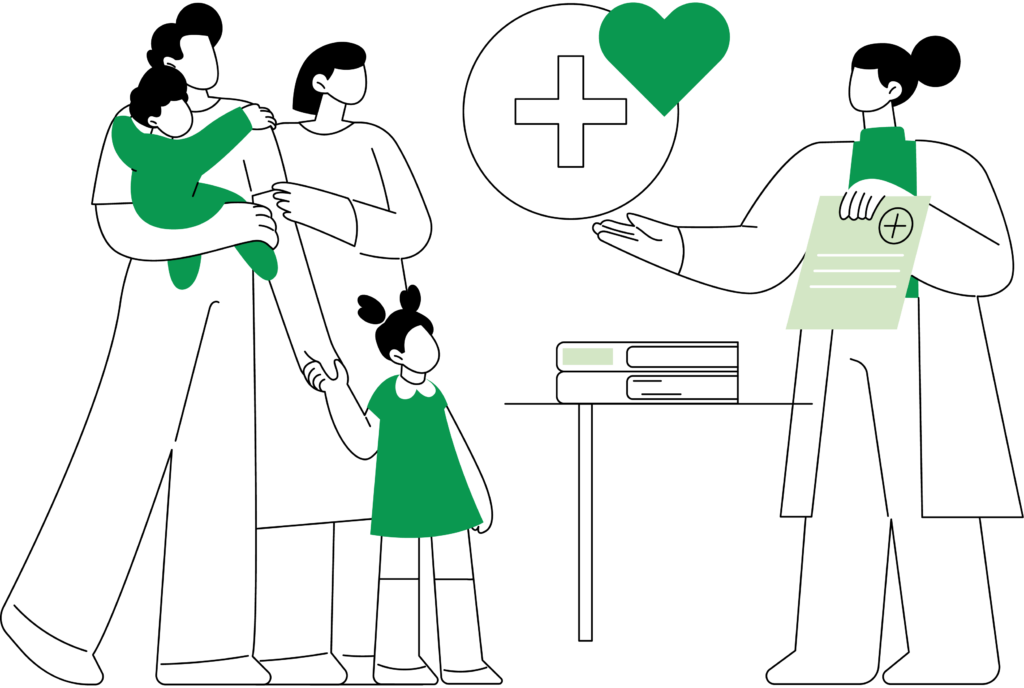 Child development is influenced by physical, behavioral, emotional, social, and environmental factors. Milestones can serve as a starting point for providers, families, educators, and community partners to identify concerns earlier, communicate across disciplines, and coordinate care around the whole child.
“Developmental milestones are more than clinical benchmarks; they serve as important touchpoints that help providers, caregivers, and interdisciplinary teams identify opportunities for support early in a child’s developmental journey,” says Shaina Nedderman, MPH, a Doctor of Behavioral Health student at Cummings Graduate Institute for Behavioral Health Studies.
This multidisciplinary approach aligns with current pediatric recommendations that emphasize developmental surveillance and screening as ongoing processes involving healthcare providers, families, and community supports to promote optimal child development (Lipkin et al., 2020).
Viewed through that lens, the CDC’s revisions become less about changing expectations and more about creating opportunities for earlier conversations, stronger collaboration, and more coordinated care.
The Child Isn’t the Only One Being Evaluated
 For many parents, developmental milestone charts can feel less like healthcare tools and more like report cards. Every delayed word, missed gesture, or later-than-expected skill can trigger worry, comparison, and self-doubt.
Anyone who has spent time around new parents has likely witnessed these conversations. One child begins walking at ten months while another takes their first steps at fifteen. One toddler seems to speak in complete sentences while another communicates through gestures and sounds. Development is rarely linear, yet milestone charts often create the impression that there is a narrow window for success.
The CDC’s updates acknowledge something clinicians have long observed: healthy development occurs across a range of timelines.
“From a behavioral health perspective, these updates provide an opportunity to support not only the child, but the entire family. Clearer developmental expectations can reduce unnecessary anxiety while helping caregivers feel more informed and empowered in their child’s development,” says Nedderman.
That distinction matters. When parents feel informed rather than alarmed, they are often better positioned to engage with providers, ask questions, and participate in interventions when they are needed. Supporting caregiver well-being is not separate from supporting child development. The two are deeply connected.
While developmental screening is an important first step, many children continue to face barriers to receiving needed services. Recent research found that a substantial proportion of young children with identified mental health needs do not receive services, highlighting ongoing gaps in access and care coordination (Meng & Wiznitzer, 2024).
What Happens After a Concern Is Identified?
Identifying a developmental concern is only the beginning.
The real challenge often comes afterward.
Families may be referred for developmental evaluations, speech therapy, occupational therapy, behavioral health services, or early intervention programs. Depending on where they live, those services may be readily available or they may involve months-long waitlists, transportation barriers, insurance challenges, or workforce shortages.
This reality highlights an important tension in conversations about developmental screening. Early identification is critical, but identification alone does not improve outcomes. Access does.
From a public health perspective, developmental milestones are only as effective as the systems that support them. A child who is identified early but cannot access services remains at risk for poorer outcomes. Likewise, families who struggle to navigate fragmented healthcare systems may miss opportunities for intervention altogether.
This is where integrated care becomes particularly valuable.
“The CDC’s updated milestones reinforce the importance of integrated care by creating clearer pathways for collaboration among pediatric, behavioral health, and developmental specialists. When concerns are identified early, families can access coordinated support before challenges become more complex,” says Nedderman.
Integrated care models seek to close the gaps that often exist between identification, referral, treatment, and follow-up. Rather than requiring families to navigate multiple disconnected systems, integrated teams work together to coordinate services and address the full range of factors affecting a child’s development.
Integrated care models that combine medical and behavioral health services have demonstrated improvements in access, clinical outcomes, and care coordination for children and families when compared with traditional fragmented systems of care (Asarnow et al., 2015).
A Developmental Milestone Doesn’t Exist in Isolation
One of the most overlooked aspects of child development is how interconnected it is with nearly every other aspect of a child’s life.
A delay in communication can affect social relationships. Emotional regulation can influence school readiness. Family stress, housing instability, access to healthcare, and caregiver mental health can all shape developmental outcomes. Development does not happen in a vacuum.
 This is one reason the CDC’s revisions place greater emphasis on social-emotional development. While physical milestones are often easier to observe, social and emotional skills can be equally important indicators of a child’s overall well-being. The ability to engage with others, express emotions, respond to social cues, and build relationships forms the foundation for future learning and resilience.
Emerging evidence demonstrates that early social-emotional competencies are associated with long-term academic achievement, mental health outcomes, interpersonal functioning, and resilience across the lifespan (Jones et al., 2015; Center on the Developing Child, 2023).
For behavioral health professionals, these milestones create opportunities to identify concerns before they become crises. They also reinforce a growing understanding that developmental health and behavioral health cannot be separated into distinct categories. Children experience development as a whole process, and healthcare systems increasingly need to respond the same way.
The Future of Child Health Is Collaborative
The conversation surrounding the CDC’s updated milestones ultimately points to something much larger than developmental benchmarks.
It reflects a growing recognition that child health cannot be understood through a single discipline, provider, or appointment. The factors that influence healthy development are interconnected, and the systems designed to support children must become equally connected.
“As healthcare continues to move toward whole-person care, developmental screening should be viewed as a shared responsibility across disciplines. Early identification and intervention are most effective when providers work together to address the cognitive, emotional, behavioral, and physical needs of children and families,” says Nedderman.
The milestone revisions may have started a debate about when children should walk, talk, or reach other developmental benchmarks. But perhaps their greatest contribution is encouraging healthcare professionals to think beyond the milestones themselves.
Integrated care models that combine medical and behavioral health services have demonstrated improvements in access, clinical outcomes, and care coordination for children and families when compared with traditional fragmented systems of care (Asarnow et al., 2015)
The future of child healthcare will not be defined by checklists. It will be defined by how effectively providers, families, and communities work together to ensure every child has the opportunity to thrive.
Article Contributor

Shaina Nedderman, MPH
Shaina Nedderman, MPH, is a Doctor of Behavioral Health candidate with a Master of Public Health and a strong background in health equity, education, and community engagement. She currently serves as a Health Equity Project Manager, leading community-informed initiatives that address healthcare disparities and promote equitable outcomes. As an educator and advocate, Shaina is passionate about advancing integrated, culturally responsive healthcare systems, with a focus on women’s health, mental health, and underserved communities.
References
Lipkin, P. H., Macias, M. M., Norwood, K. W., Brei, T. J., Davidson, L. F., Davis, B. E., … & Voigt, R. G. (2020). Promoting optimal development: identifying infants and young children with developmental disorders through developmental surveillance and screening. Pediatrics, 145(1).
Zubler, J. M., Wiggins, L. D., Macias, M. M., Whitaker, T. M., Shaw, J. S., Squires, J. K., … & Lipkin, P. H. (2022). Evidence-informed milestones for developmental surveillance tools. Pediatrics, 149(3), e2021052138.
Kuo, D. Z., Houtrow, A. J., Arango, P., Kuhlthau, K. A., Simmons, J. M., & Neff, J. M. (2012). Family-centered care: current applications and future directions in pediatric health care. Maternal and child health journal, 16(2), 297–305. https://doi.org/10.1007/s10995-011-0751-7
Asarnow, J. R., Rozenman, M., Wiblin, J., & Zeltzer, L. (2015). Integrated medical-behavioral care compared with usual primary care for child and adolescent behavioral health: a meta-analysis. JAMA pediatrics, 169(10), 929-937.
Meng, J. F., & Wiznitzer, E. (2024). Factors associated with not receiving mental health services among children with a mental disorder in early childhood in the United States, 2021–2022. Preventing Chronic Disease, 21, E79.