 From Advocacy to Action: How Dr. Kristin L McQueeney Is Advancing Human-Centered Care
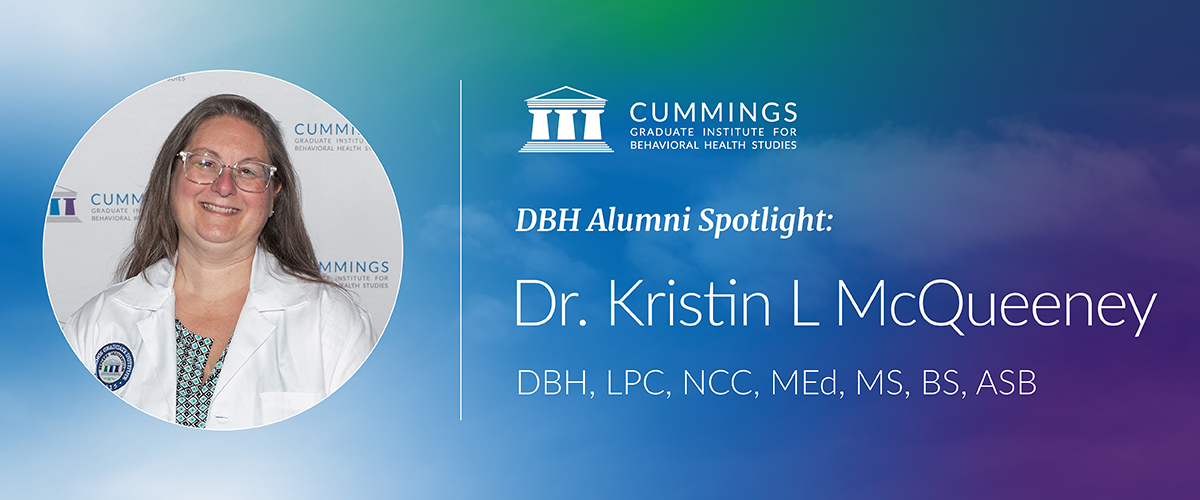
Dr. Kristin L McQueeney is a Doctor of Behavioral Health (DBH), educator, and advocate whose work centers on advancing health literacy, patient self-advocacy, and integrated care for adolescents and young adults. A wife, mother, and scholar, she brings a multidisciplinary background in psychology, school counseling, educational psychology, and behavioral health to her efforts to improve healthcare systems and patient outcomes. Through initiatives such as the Eclipse Project and the youth-led Mental Matters podcast, Dr. McQueeney has focused on empowering patients and communities through education, collaboration, and whole-person care. Most recently, she presented pilot data on the Eclipse Project at the International Conference on Integrated Care (ICIC26) in Birmingham, United Kingdom, with her work forthcoming in an international journal. In this interview, Dr. McQueeney shares her vision for transforming healthcare systems, the role of DBHs in advancing human-centered wellness, and the personal experiences that shaped her leadership and advocacy in integrated behavioral health.
How has earning your DBH changed the way you view health, healing, and integrated care?
Before earning my DBH, it was about helping others and fighting the big guys. After earning my DBH, it has been about burning down the broken healthcare system (in the USA) and starting over with fresh seeds and mindset! LOL!! The past broke the patient by seeing them as a profit and depersonalizing medicine. The present is attempting to survive long enough to finish a flooded day of admissions at the ED.
The DBH at CGI has provided me and other alumni with the support, education, and bravery to complete the task as a collective and in collaboration with each future patient we engage with. My CP at CGI, Eclipse Project: Bridging the Gap Between Pediatric Medical Care and Adult Medical Care is more than a paper. I had the honor of finding a community healthcare center in Pennsylvania partner in piloting the introduction to 30 refugee newcomers and young adults in 2024-2025. The results were positive and showed the curriculum, increased patients’ self-esteem, engagement during visits, and health literacy while also reducing no-show rates or cancellations of appointments. The return on the investment was amazing!
The future is going to be driven by the patient and care teams to maximize population quality of life. Health Care, Collaborative Care, Integrated health; all simply precursors to more meaningful focus and accurate title; Human Wellness in Life. I will disrupt the system with a smile and grit accompanied by other CGI alumni and partners. Watch me!
Behavioral health is evolving quickly. What do you believe is the next frontier for the field?
The next frontier is going beyond the rules of billing and focusing on patient engagement, education, and self-advocacy to collaborate on Human Wellness in Life. The Eclipse Project and stakeholders in medical offices have the power to do what is right, still comply with regulations, and have an influence in outcomes for all stakeholders.
For decades, we forget to look at the Quadruple Aid when designing anything in medicine. The patients were excused/pushed out of practice, providers were insulted and minimized under tons of paperwork and pre-authorizations, and the agency was overly regulated by insurance companies and other funding sources, leaving us all victims of greed under the flag of progress. Quite honestly, if we look at this, the medical insurance structure and reimbursement system has been Gaslighting the entire USA for decades. At this point, the next frontier is simple, like any other victim, we tell our story and hold the offender accountable. After that, we address personal and corporate healing through simply practicing from the WHOLISTIC standpoint.
As a DBH, we are hearing the stories of Gaslighting, see the effects on all stakeholders, and have the knowledge and stamina to pull together. We also have the strength as a DBH to use our medical literacy skills, and business background to be a keystone at the table of change and healing. I spend several hours a week listening to providers, medical billers, front desk staff, and patients expressing their frustrations, medical gaps, and desires for improvement. Slowly, I can bring stakeholders to the table, encourage discussion on one topic/area at a time, and have seen improvement firsthand. At the end of the day, my time and energy have been used wisely, and my heart is full of joy for those that have progressed through change and self-healing.
Looking back, what moment or lesson from your DBH experience most transformed you?
I had been in the DBH program for three months when an immediate family member died from COVID 19. Within 10 minutes of notifying my professor, I had received a phone call from her and the CEO of CGI with their respects and to check on me and my family. This was a surprise and my first personal example of how a DBH makes a difference in a single person’s life.
A second time was during my CP and I again was struggling, this time with personal health issues. My Advisor was dedicated to checking on me, providing quick responses to questions, and words of encouragement! We have remained tight and I was honored to connect at the ICIC26 conference in Birmingham UK, more than a year after I have graduated! My love for the CGI has just grown and I see the resilience of each student as they present and defend their CP’s! These group members are truly disrupters and great friends.
What is the change you most hope to see in healthcare during your lifetime, and how are you working to help lead it?
As a behavioral health leader, I hope to change how we train and support medical professionals. Providers graduate with general knowledge of medicine, research experience, and internship-based patient practice. However, many enter the field without access to mentors or a structured path for professional growth after graduation or completion of licensure.
These connections have become even harder to find since COVID, as access to senior staff has declined. Many experienced therapists moved to private practice to reduce the stress of agency work—high productivity demands, unrealistic scheduling, and limited autonomy. Agencies have not adjusted, and they often fail to provide consistent, high-quality supervision for clinicians working toward licensure hours and skill development. Instead, financial pressures such as low insurance reimbursement are frequently pushed onto therapists, while schedule micromanagement further limits professional growth and development.
To help address these gaps, I started my own consulting and supervision company, Harvest Authentic Behavioral Health LLC. I provide licensure supervision and mentoring that covers both state-regulated requirements and professional development that supports a sustainable, high-quality professional life. My training and supervision include provider self-care, cultural competency, countertransference, historical and ongoing medical and mental health oppression and barriers to care, and a biopsychosocial perspective that considers both the provider and the patient. I also incorporate mindfulness practices and practical wellness strategies, emphasizing how a clinician’s own health can strengthen job performance and improve patient outcomes.
How do you define leadership in behavioral health, and how has the DBH prepared you to lead with courage, empathy, and evidence?
This is simple to answer. Leadership is role modeling, providing encouragement, and taking risks for the underrepresented because it is right and good. To be a DBH your level of courage will increase throughout your program. Your empathy will be enhanced by the breath of knowledge and research you complete. The evidence of this has been seen several times in CGI alumni as they present at conferences across the world, the roles they fill in local and state level government and associations, the books they write and publish, and the connections they facilitate between those in need and those that can provide. Where are my specific references for this? Here are the list of graduates I am referring to; Dr Jeremy Henderson-Teelucksingh, Dr Brandy Biglow, Dr Ellen Fink-Samnick, Dr Selena Schmidt, Dr William Chum, Dr Juan Sanchez, and Dr Liliane Rocha.
Every DBH student begins with a “why.” What would you say to someone just beginning to discover theirs?
Now is the time for action and connection – enroll, engage, eradicate! I will cheer for you and with you, just be present and do your best each day, each assignment. You are not alone on the DBH journey!
Dr. Kristin L McQueeney’s work reflects the growing impact of Doctor of Behavioral Health professionals in reshaping healthcare systems through integrated, patient-centered approaches. From developing the Eclipse Project to mentoring future clinicians through Harvest Authentic Behavioral Health LLC, she continues to apply the leadership, systems thinking, and collaborative care principles strengthened through the DBH program at CGI. Dr. McQueeney’s commitment to advocacy, education, and whole-person wellness demonstrates how DBH-trained professionals are helping drive meaningful change across behavioral health and healthcare systems, improving outcomes not only for patients, but also for providers and communities.
Connect with Dr. Kristin L McQueeney
Dr. Kristin L McQueeney Presented at ICIC26 in Birmingham, UK

Cummings Graduate Institute for Behavioral Health Studies (CGI) is proud to announce that faculty members and Doctor of Behavioral Health (DBH) students and alumni will be presenting at the 26th International Conference on Integrated Care (ICIC26), taking place April 13–15, 2026, in Birmingham, UK.
Dr. Kristin L McQueeney Contributes to Upcoming Book: Integrated Behavioral Health: Applying the Biodyne Mindset in Healthcare
Cummings Graduate Institute for Behavioral Health Studies (CGI) is proud to announce the upcoming release of the groundbreaking new book, Integrated Behavioral Health: Applying the Biodyne Mindset in Healthcare, set for publication in January 2026. This new book builds on the foundation laid by Dr. Nicholas A. Cummings and Dr. Janet Cummings, renowned psychologists and co-founders of both the Doctor of Behavioral Health (DBH) degree program and CGI, who previously introduced the influential Biodyne Model in their seminal work Refocused Psychotherapy as the First Line Intervention in Behavioral Health.