 Where Counseling, Leadership, and Advocacy Meet: Dr. Napoleon Harrington on Creating Systems-Level Change
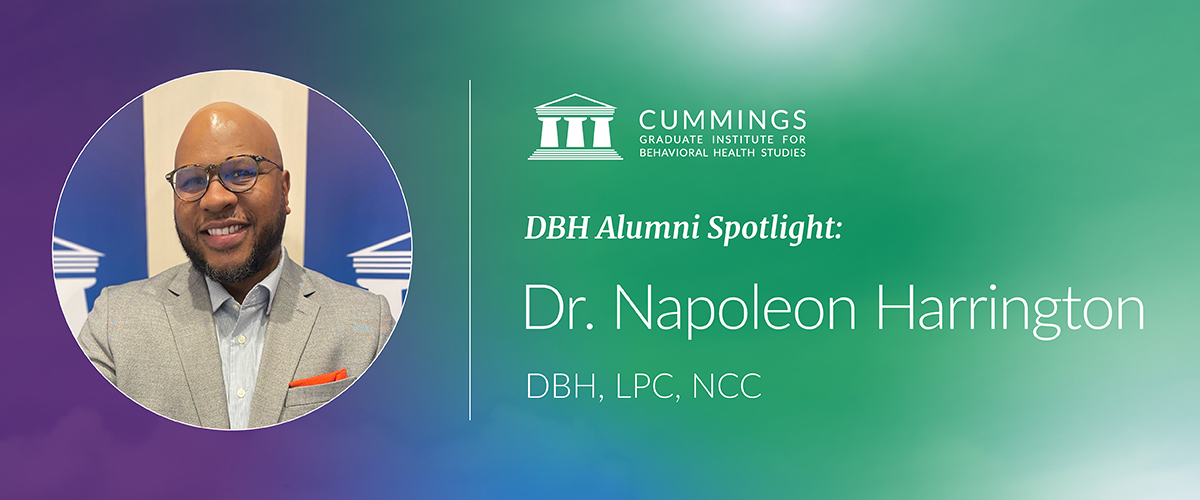
Dr. Napoleon Harrington is a Doctor of Behavioral Health and Licensed Professional Counselor with more than 20 years of experience in higher education and clinical practice. His academic and professional work spans the integration of behavioral health and medical care, mental health systems leadership, counselor education, and the development of culturally responsive, evidence-based interventions. Dr. Harrington’s commitment to advocacy and the counseling profession has also extended to state and national leadership, including helping advance Michigan Public Act 96 of 2019, receiving the American Mental Health Counselors Association’s 2020 Counselor of the Year award, and serving on the Michigan Board of Counseling. In this interview, Dr. Harrington shares how the DBH expanded his perspective from individual clinical practice to systems-level change, how systems thinking continues to shape his work across healthcare, education, policy, and advocacy, and the impact he hopes to make by preparing future counselors and improving the systems in which they serve.
What are you working on now, and how has your DBH experience influenced your current work?
Right now, my work sits at the intersection of counseling, education, healthcare, research, leadership, and advocacy—and in many ways, that intersection is where my DBH training shows up the most.
As a counselor educator, a significant part of my work is preparing the next generation of counselors. I don’t just want students to learn how to counsel. I want them to understand the larger systems they are entering, how healthcare works, how policy affects practice, and why their voices matter within the profession. I think my DBH experience has made me a different kind of educator because I’m constantly encouraging students to connect what happens in the counseling room with what is happening outside of it.
I’m also involved in work around professional standards, counselor supervision, licensure, and behavioral health workforce issues. That work requires me to look across systems, identify inconsistencies and gaps, bring different perspectives together, and think about how decisions made at an organizational or policy level eventually affect clinicians and the people they serve. My voice is essential in helping to shape legislation that influences the way mental health is facilitated.
My research interests are continuing to evolve as well. I’m particularly interested in integrated behavioral health, infertility and IVF, men’s behavioral health, and the experiences of populations that have historically been underrepresented in healthcare research. I’m interested not only in documenting disparities or identifying problems, but in asking, “What can we actually build or change because we know this?”. This question probably captures the DBH influence on my work better than anything else.
I have become much less interested in identifying problems without also thinking about implementation. If we know there is a gap, what do we do about it? Who needs to be involved? What would a sustainable solution look like? How do we measure whether it actually worked?
Day to day, the DBH shows up in the questions I ask, the people I bring into conversations, and my willingness to move between clinical and systems-level spaces.
At this point in my career, I’m building toward work that connects behavioral health practice with healthcare strategy, education, policy, and systems change. I want to continue helping individual people, but I also want to help build better environments for the professionals who serve them. I am seeing myself transitioning from predominately being a practitioner and more into the role of strategist, consultant, and researcher.
The DBH helped me realize that I can do both.
Looking back, what part of your DBH experience stands out the most to you now?
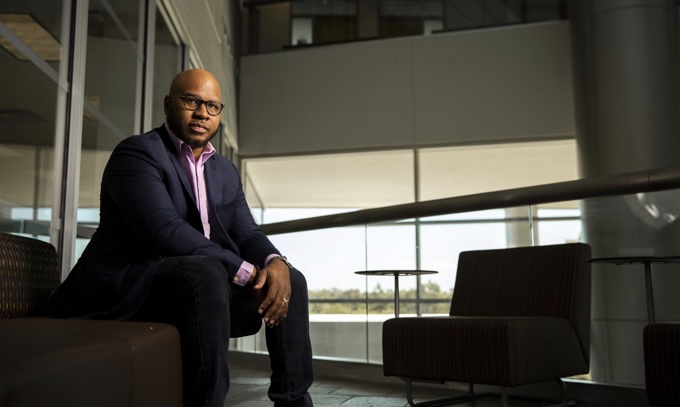 When I look back at my DBH experience, what stands out most is that it helped me see myself differently. I came into the program as a counselor. That was the lens through which I understood helping people. I knew how to sit with someone, listen, build a relationship, and help them work through what was happening in their life. But somewhere along the way, the DBH experience challenged me to think bigger—not bigger in terms of importance, but bigger in terms of impact.
I started to understand that sometimes helping the person sitting in front of you also means paying attention to the system surrounding them. That really stayed with me.
I began thinking more about healthcare, leadership, access, policy, education, and the systems that determine whether people actually get the help they need. I also started recognizing that my clinical background gave me something valuable to bring into those conversations. I didn’t have to stop being a counselor to become a leader, advocate, educator, or strategist. In many ways, being a counselor is what informs how I show up in those spaces.
The DBH experience also gave me permission to think differently about what my career could look like. My work today crosses a lot of spaces—counseling, teaching, research, advocacy, professional leadership, and healthcare—and I don’t necessarily see those as separate things anymore. They are all connected by the same question: How do we make things better for the people we serve?
If there is one thing from the DBH experience that continues to influence me, it is that.
I still believe deeply in the power of sitting across from one person and helping them change their life. But I also understand now that there are times when you have to get up from that chair, walk into the rooms where decisions are being made, and advocate for changing the conditions that affect that person’s life.
For me, that has probably been the most lasting impact of becoming a DBH.
How has the DBH changed the way you approach behavioral health or healthcare overall?
The DBH changed the way I think about behavioral health because I no longer see behavioral health and healthcare as two separate conversations.
Before the program, much of my perspective was naturally shaped by my training as a counselor. I was focused on the person in front of me: What are they experiencing? What do they need? How can I help? I still ask those questions, but the DBH taught me to ask another question: What is happening around this person that is contributing to what I am seeing?
That shift has probably been one of the biggest changes in how I approach this work.
Now, when I think about behavioral health, I am also thinking about physical health, access to care, healthcare systems, social determinants, workforce issues, policy, culture, prevention, and the different professionals who need to work together to care for the whole person. I have become much more interested in what happens when we stop treating mental health as something that exists on an island.
The DBH also taught me to look upstream. Sometimes we are very good at responding once someone is already in crisis or experiencing significant distress. But I find myself asking more often: What could we have done earlier? Where did the system miss an opportunity? What barriers made it harder for this person to get what they needed?
That perspective influences how I teach future counselors, how I think about advocacy, and how I approach leadership and professional issues. I want clinicians to understand that their work matters tremendously at the individual level, but I also want them to recognize the larger healthcare environment they are working within.
Perhaps most importantly, the DBH helped me become comfortable moving between worlds. I can sit in on conversations about counseling and clinical care, and I can also sit in conversations about healthcare strategy, workforce development, policy, education, and systems change. I understand now that those conversations belong together.
So, the DBH didn’t move me away from being a counselor. If anything, it expanded what being a counselor means to me. It taught me to see the person, the system around the person, and the opportunities we have to improve both.
What is one skill, concept, or takeaway from the DBH that you use regularly in your work today?
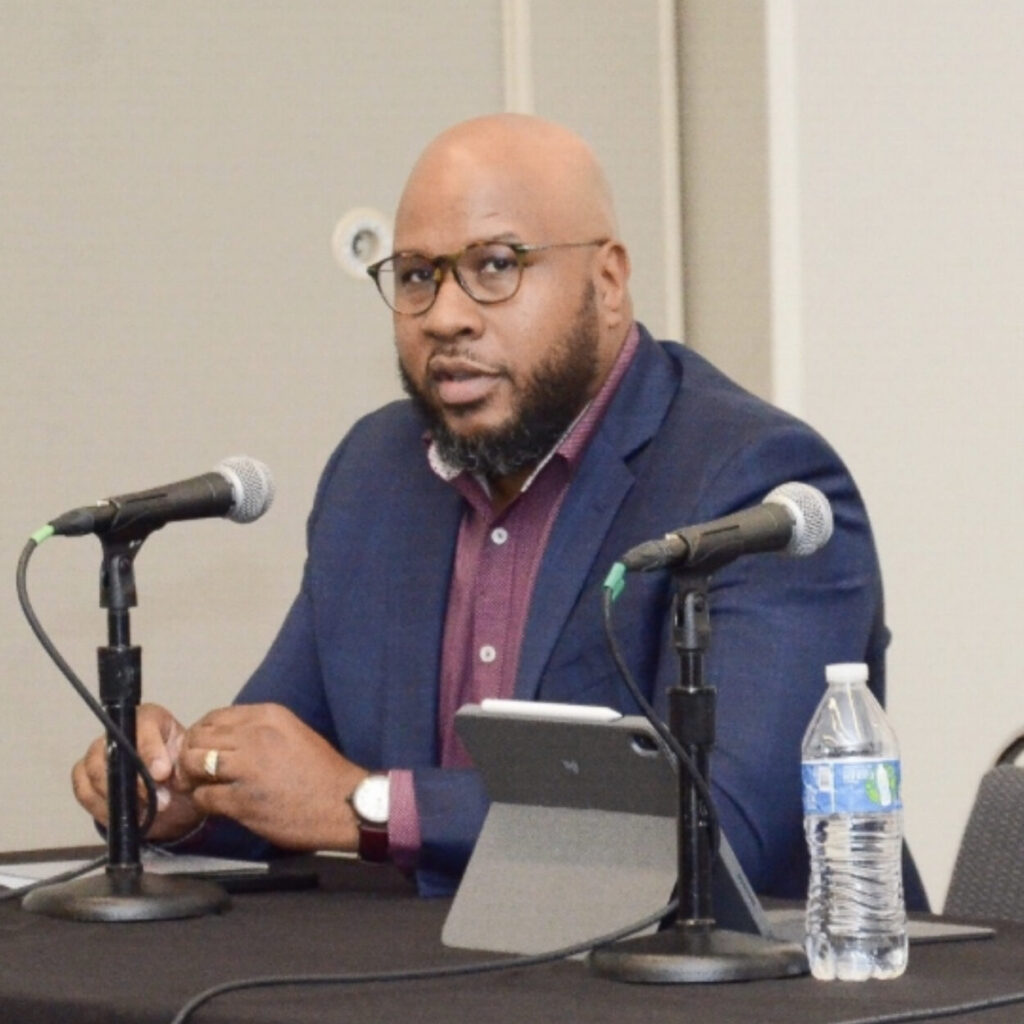 One takeaway from the DBH that I use almost every day is systems thinking.
The DBH taught me not to look at a problem only for what it is, but to also ask what is happening around it. What created it? What is maintaining it? Who is affected by it? Who is missing from the conversation? And, probably most importantly, where is the opportunity to actually change something?
That way of thinking has become almost automatic for me.
As a counselor, I might see someone struggling with their mental health, but I am also thinking about their physical health, family, environment, access to care, culture, finances, and the healthcare system they are trying to navigate. As an educator, if a student is struggling, I don’t immediately reduce the issue to the student. I think about the learning environment, supervision, expectations, resources, and other factors that may be influencing what I am seeing.
I use that same thinking in leadership and advocacy. When there is a workforce issue, a licensing concern, a gap in healthcare, or a policy that affects behavioral health professionals, my first instinct is usually to start connecting the dots. I want to know how we got here, who is impacted, what the unintended consequences might be, and where intervention could make the greatest difference.
The DBH also taught me that complex problems rarely have single-discipline solutions. Sometimes the counselor needs to be talking to the physician. The educator needs to be talking to the policymaker. The clinician needs to understand what administrators are facing. And sometimes the most important thing you can do is bring people into the same room who normally would not be talking to each other.
I think that is one of the biggest ways the DBH continues to show up in my work. It changed the questions I ask.
Instead of only asking, “How do we fix this problem?” I find myself asking, “What is the system telling us, and where can we intervene in a way that creates meaningful and sustainable change?”
That shift—from simply responding to problems to understanding the systems producing them—is something I carry into almost every aspect of my work today.
What kind of impact are you hoping to make in your field or community?
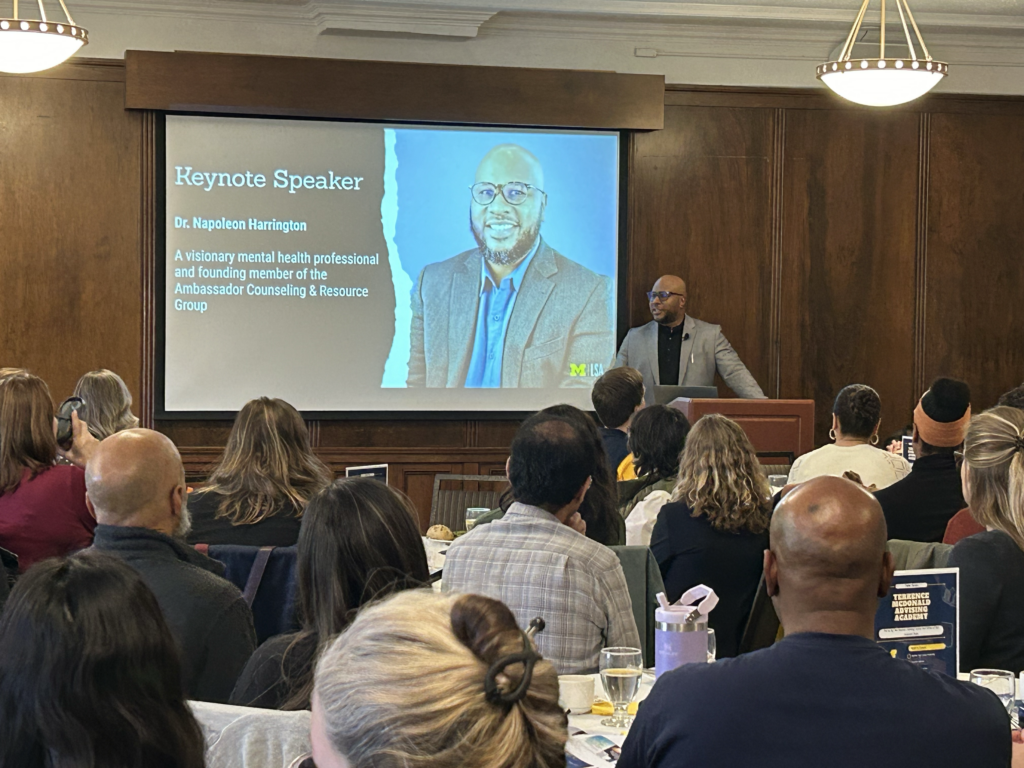 The impact I hope to make is actually pretty simple: I want to leave things better than I found them.
That has become increasingly important to me as my career has evolved. I don’t just want to participate in systems; I want to understand them, question them when necessary, and contribute to making them better for the people who come after me.
A large part of that work is through education. As a counselor educator, I have the opportunity to influence people who will go out and influence hundreds, potentially thousands, of lives throughout their careers. I take that responsibility seriously. I want the counselors I teach to leave the classroom knowing how to help people, but I also want them to understand their value, trust their voice, think critically, and recognize that they have a responsibility to the profession beyond simply practicing within it.
I’m also increasingly interested in the spaces where behavioral health, healthcare, education, leadership, and policy intersect. There are decisions being made every day that affect clinicians and the people we serve, and too often the voices of behavioral health professionals are missing from those conversations. I want to help change that. I want to be in those rooms, but I also want to help create pathways for others to get into those rooms.
What drives me is the belief that meaningful change doesn’t always have to begin with something enormous. Sometimes it begins with asking a better question. Sometimes it’s challenging something we’ve accepted simply because “that’s how we’ve always done it.” Sometimes it’s mentoring one student, advocating for one policy change, bringing the right people together, or having a conversation that causes someone to see a problem differently.
Ultimately, I’m building toward a career where my clinical experience, teaching, research, leadership, and advocacy all work together rather than existing in separate spaces.
And when I think about legacy, I don’t necessarily think about titles or positions. I think about people and possibilities. I hope there are counselors who practice differently because I taught them, professionals who speak up because I encouraged them, systems that work a little better because I helped challenge them, and people who recognize that their voice belongs in places where important decisions are being made.
If I can contribute to that kind of change, then I will feel like the work mattered.
What would you say to someone considering the DBH program?
I would tell someone considering the DBH program to come into it with an open mind about what the degree might become for you.
When I started, I don’t think I fully understood all the ways the DBH would eventually influence my career. I could understand the coursework, the competencies, and the idea of integrated behavioral health, but I couldn’t necessarily see where all of it would take me. Looking back, that was probably part of the value of the experience.
The DBH expanded what I thought was possible.
My advice would be: don’t just complete the program—use the program.
Ask questions. Build relationships. Pay attention to the things that spark your curiosity. Take an assignment beyond what is required when the topic matters to you. Find the healthcare problems that frustrate you, because sometimes those frustrations are pointing you toward the work you are supposed to be doing.
I would also encourage someone not to become overly focused on what their exact job title will be when they finish. One of the things I’ve learned is that the value of the DBH isn’t necessarily tied to one position. It is a way of thinking. It gives you the ability to move between behavioral health, healthcare, leadership, education, strategy, and systems-level conversations in a way that can be incredibly valuable.
But you have to decide what you are going to do with that.
For me, the DBH didn’t replace my identity as a counselor. It expanded it. It helped me recognize that I could be a clinician and an educator, an advocate, a researcher, a leader, and someone interested in changing systems. I didn’t have to fit neatly into one box.
So I would tell someone considering the program: be open to becoming more than what you currently imagine yourself becoming.
You may enter the program with a very specific idea of where you’re headed, and that’s okay. But leave some room for the experience to challenge that idea.
The degree will give you knowledge and tools, but some of its greatest value may be helping you recognize where your experience, your voice, and your perspective are needed.
And when you recognize that space, don’t be afraid to step into it.
Dr. Napoleon Harrington’s journey reflects how the DBH can expand the ways behavioral health professionals understand and influence their field. For him, the program built upon his foundation as a counselor while broadening his perspective to include healthcare systems, policy, leadership, education, and advocacy. Today, Dr. Harrington applies that systems-level perspective across his work as an educator, researcher, leader, and advocate, with a focus on creating meaningful and sustainable change for behavioral health professionals and the communities they serve.
Connect with Dr. Napoleon Harrington
CGI Alumnus Dr. Napoleon Harrington Receives 2026 DEAC Famous Alumni Awar
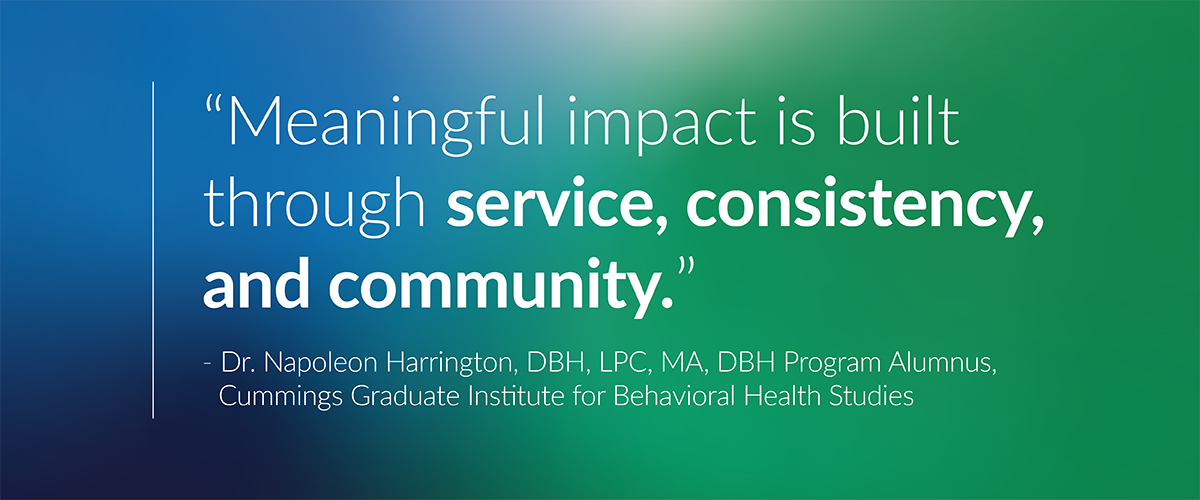
Dr. Napoleon Harrington, DBH, LPC, MA, has been recognized with the 2026 Distance Education Accrediting Commission (DEAC) Famous Alumni Award, honoring his leadership, advocacy, and impact in the field of behavioral health. A graduate of Cummings Graduate Institute for Behavioral Health Studies’ Doctor of Behavioral Health (DBH) program, Dr. Harrington has built a distinguished career centered on expanding access to mental health care, advancing the counseling profession, and promoting integrated behavioral health solutions.
Dr. Napoleon Harrington Reappointed to Michigan Board of Counseling
Cummings Graduate Institute for Behavioral Health Studies proudly celebrates DBH program alumnus, Dr. Napoleon Harrington, DBH, LPC, on his reappointment to the Michigan Board of Counseling by Governor Gretchen Whitmer. Serving as Vice Chair, Dr. Harrington continues to represent licensed professional counselors in a regulatory capacity while highlighting the dynamic contributions of Doctor of Behavioral Health professionals to the field.
Check Out Dr. Napoleon Harrington on the Disruptors at Work Podcast
In this episode of Disruptors at Work: An Integrated Care Podcast, Dr. Cara English speaks with DBH student Napoleon Harrington about the importance of leadership and advocacy in the mental health profession. Drawing on his experience advancing legislation in Michigan, Harrington shares insights on professional collaboration, policy change, and the role of behavioral health professionals in shaping healthcare systems and strengthening the profession.
DBH Students on the Frontline: Serving Communities of Color
In this episode of Disruptors at Work: An Integrated Care Podcast, host Dr. U. Grant Baldwin, Jr. is joined by six Doctor of Behavioral Health (DBH) students, including Napoleon Harrington, who are working on the frontlines of integrated healthcare and serving communities of color. The episode highlights the perspectives and experiences of clinicians dedicated to advancing health equity, addressing barriers to care, and improving behavioral health services for underserved populations.